
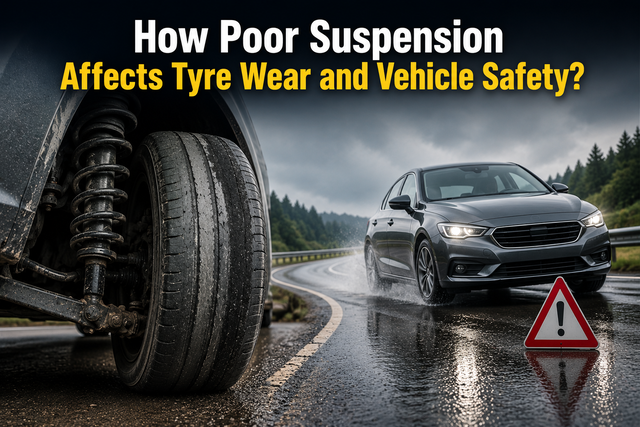
How Poor Suspension Affects Tyre Wear and Vehicle Safety?
Bad suspension wears out your tyres faster and makes your vehicle genuinely harder to control.
It is one of the most overlooked causes of uneven tyre wear in New Zealand, and most drivers do not connect the two until they are already buying a replacement set.
If you have been dealing with uneven wear or a rough ride and want an honest assessment, getting your car suspension in Auckland checked by a professional is the right first step.
Your suspension keeps your tyres flat and evenly loaded against the road. Every time you go over a bump, a pothole, or a rough gravel road, your suspension absorbs that impact so your tyres do not have to.
When it works correctly, your tyres wear evenly, your car handles predictably, and braking is smooth. When it starts to fail, your tyres pay the price.
What Worn Suspension Does to Your Tyres?
Worn suspension components change the angles at which your tyres sit on the road. Instead of sitting flat, they begin loading on one edge or developing irregular wear patches.
The damage is gradual, which is why drivers often blame the tyres themselves rather than the suspension underneath. The most common wear patterns caused by suspension problems are:
- Cupping or scalloping: dips that appear around the tread caused by a tyre bouncing due to worn shock absorbers.
- Inner or outer edge wear: when camber angles shift from worn control arms or bushings, one edge carries most of the load.
- Feathering: tread blocks that are smooth on one side and sharp on the other, typically linked to toe alignment issues from worn suspension arms.
- Diagonal or patchy wear: irregular patches across the face of the tyre, which often signal a combination of worn components working against each other.
If you spot any of these patterns during a tyre check, do not just replace the tyres. Putting new rubber on a worn suspension will repeat the same damage within months.
What Are The Safety Risks That Come with Poor Suspension?
Uneven tyre wear is the visible sign, but the safety risks from poor car suspension go further than that. When your suspension is compromised, your vehicle becomes harder to manage in exactly the situations where you need full control.
- Braking distance increases because worn shock absorbers reduce the contact your tyres have with the road surface.
- Cornering becomes less predictable, with the car leaning more than it should or feeling like it drifts through bends.
- Steering response slows down because worn tie rod ends and bushings introduce play into the steering system.
- Stability drops on wet Auckland roads or uneven surfaces where a healthy suspension would keep all four tyres properly loaded.
These are not minor comfort issues. They are real safety risks on New Zealand roads, particularly if you drive on motorways, rural highways, or gravel roads where conditions can change quickly.
What Are The Warning Signs to Watch For?
The earlier you catch suspension problems, the cheaper they are to fix and the less damage they do to your tyres. Watch out for these signs:
- Your car bounces noticeably after going over a bump and takes a moment to settle back down.
- You hear clunking, knocking, or squeaking when you go over speed bumps or rough road surfaces.
- The car pulls to one side when driving on a flat, straight road.
- Your steering wheel vibrates at certain speeds or feels loose and disconnected from the wheels.
- The front of the car dips heavily when you apply the brakes.
- You can see uneven tyre wear on one or more tyres.
Any one of these signs is worth taking seriously. Two or more together means a suspension inspection should happen soon.
Why Suspension and Wheel Alignment Go Together?
Your suspension and wheel alignment are closely connected. Worn suspension components change your wheel geometry, which throws your alignment out. And when your alignment is off, your tyres wear unevenly, and your fuel economy suffers.
This means a wheel alignment alone will not fix a suspension problem. A good technician checks the suspension first, replaces anything that is worn, and then sets the alignment correctly.
Skipping straight to the alignment means it will drift again within weeks as the worn parts continue to move.
When to Get Your Suspension Inspected?
A general guide is to have your suspension checked every 20,000 km or once a year, whichever comes first.
If you drive on gravel roads or rough surfaces regularly, check them more often. Your WOF will flag obvious failures, but it is not a full suspension assessment.
Uneven tyre wear, a changed ride quality, or any of the warning signs above are all good reasons to book a professional inspection sooner.
Catching worn suspension early protects your tyres, improves your safety, and is almost always cheaper than the repair bill you face if you leave it too long.
If you are seeing any signs of trouble, book a free tyre and suspension safety check and get a clear picture of what is actually going on under your vehicle.