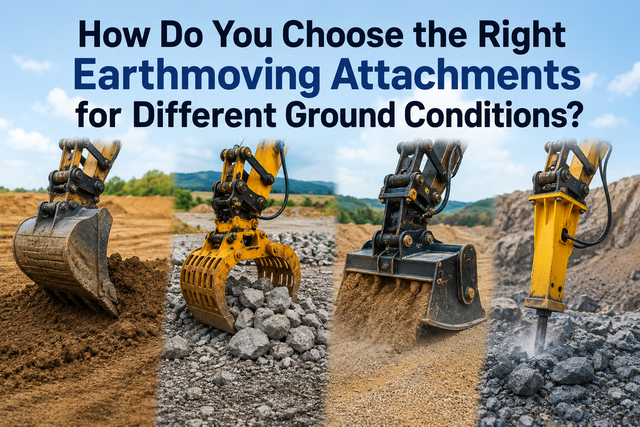
How Do You Choose the Right Earthmoving Attachments for Different Ground Conditions?
Earthmoving projects are rarely carried out under identical site conditions. Contractors often encounter everything from loose sand and soft soil to compacted clay, gravel, and rocky terrain. Choosing the right attachment for these varying conditions can significantly impact productivity, equipment lifespan, project costs, and overall job-site efficiency.
Modern excavator attachments Australia contractors use provide the versatility needed to tackle a wide range of applications. However, selecting the wrong attachment for the ground conditions can lead to reduced performance, increased wear, and costly downtime. Whether using an excavator auger drive for drilling, a ripper for breaking hard ground, or a trencher for utility installations, understanding ground conditions is essential for making the right equipment choice.
Table of Content
- Why Ground Conditions Matter
- Common Ground Conditions Encountered on Job Sites
- Choosing the Right Excavator Attachments for Different Conditions
- Factors to Consider Before Selecting an Attachment
- The Importance of Versatile Excavator Attachments
- Conclusion
Why Ground Conditions Matter
Different soil and terrain types create unique challenges for earthmoving equipment.
Ground conditions can affect:
- Digging speed
- Drilling efficiency
- Equipment wear
- Fuel consumption
- Operator productivity
- Project timelines
By matching attachments to the site conditions, contractors can maximise efficiency while minimising unnecessary stress on machinery.
Common Ground Conditions Encountered on Job Sites
Before selecting an attachment, it is important to identify the type of ground present on-site.
Common ground conditions include:
Soft Soil
Examples include:
- Topsoil
- Loam
- Loose fill
- Cultivated ground
Soft soil is generally easy to excavate and drill, requiring standard earthmoving attachments.
Clay
Clay can become extremely dense when compacted and often requires more powerful equipment.
Characteristics include:
- High resistance
- Increased drag during excavation
- Potential for material build-up
Sand
Sand offers low resistance but may create stability challenges during excavation and trenching.
Common applications include:
- Coastal developments
- Utility installations
- Landscaping projects
Gravel
Gravel can accelerate wear on attachment components due to its abrasive nature.
It often requires heavy-duty cutting edges and wear-resistant materials.
Rocky Ground
Rocky terrain presents some of the most demanding conditions for earthmoving equipment.
These sites may contain:
- Embedded rock
- Weathered rock
- Hard subsurface layers
- Large boulders
Specialised attachments are often necessary to maintain productivity.
Choosing the Right Excavator Attachments for Different Conditions
Buckets for General Excavation
Buckets remain the most widely used excavator attachments Australia contractors rely on for everyday earthmoving operations.
Best Suited For:
- Soft soil
- Sand
- General excavation
- Material handling
Benefits:
- Versatility
- High productivity
- Easy operation
- Cost-effective performance
Different bucket designs can be selected based on soil density and material type.
Excavator Auger Drives for Drilling Applications
An excavator auger drive is designed to drill precise holes for foundations, utility poles, fencing, and infrastructure projects.
Best Suited For:
- Soft soil
- Clay
- Sand
- Mixed ground conditions
Benefits:
- Accurate drilling
- Reduced labour requirements
- Faster hole creation
- Improved project efficiency
For challenging terrain, contractors can pair the auger drive with specialised rock augers or heavy-duty cutting teeth to improve performance.
Trenchers for Utility Installations
Trenching attachments are ideal when narrow and consistent excavations are required.
Best Suited For:
- Soft soil
- Clay
- Compacted earth
Applications:
- Electrical installations
- Water pipelines
- Telecommunications infrastructure
- Irrigation systems
Trenchers minimise excavation volume while improving installation efficiency.
Rippers for Hard Ground
When standard excavation equipment struggles to penetrate the surface, rippers can be used to break up difficult materials before excavation begins.
Best Suited For:
- Compact clay
- Weathered rock
- Hard ground
- Frozen soil
Benefits:
- Easier excavation
- Reduced bucket wear
- Improved digging efficiency
Rippers are particularly valuable in remote construction and mining projects.
Hydraulic Breakers for Rock and Concrete
Hydraulic breakers provide high-impact force for demolishing hard materials.
Best Suited For:
- Solid rock
- Concrete structures
- Asphalt surfaces
Applications:
- Demolition
- Quarry operations
- Road construction
- Site preparation
Breakers allow contractors to tackle challenging ground conditions that standard excavation equipment cannot efficiently handle.
Mulcher Attachments for Vegetation-Covered Sites
Ground conditions are not limited to soil and rock. Many sites also require vegetation removal before excavation begins.
Best Suited For:
- Overgrown land
- Forestry projects
- Utility corridors
- Site preparation
Mulchers simplify vegetation management and improve access for earthmoving operations.
Factors to Consider Before Selecting an Attachment
1. Soil Analysis
Conducting a site assessment helps identify:
- Soil composition
- Moisture levels
- Rock content
- Ground stability
Accurate information supports better equipment decisions.
2. Machine Compatibility
Attachments should match the excavator’s:
- Operating weight
- Hydraulic flow
- Hydraulic pressure
- Lift capacity
Proper compatibility ensures safe and efficient operation.
3. Project Requirements
Different projects have different priorities.
For example:
- Drilling projects benefit from an excavator auger drive
- Utility installations often require trenchers
- Hard ground excavation may require rippers or breakers
Understanding project goals helps determine the most effective attachment.
4. Durability and Maintenance
Ground conditions directly affect attachment wear.
When working in abrasive environments such as gravel or rocky terrain, contractors should prioritise:
- Wear-resistant materials
- Replaceable cutting components
- Easy maintenance access
This helps reduce downtime and lower operating costs.
The Importance of Versatile Excavator Attachments
One of the biggest advantages of modern excavator attachments Australia contractors use is versatility.
Instead of investing in multiple specialised machines, attachments allow a single excavator to perform:
- Excavation
- Drilling
- Trenching
- Demolition
- Land clearing
- Material handling
This flexibility improves equipment utilisation while reducing ownership costs.
Conclusion
Choosing the right attachment for the ground conditions is essential for achieving efficient, safe, and cost-effective earthmoving operations. Factors such as soil type, terrain, project requirements, and machine compatibility should all be carefully considered before selecting equipment.
From general excavation buckets and trenchers to hydraulic breakers and an excavator auger drive, the wide range of excavator attachments Australia contractors have access to enables them to tackle diverse site conditions with confidence.
By matching the right attachment to the ground conditions, businesses can improve productivity, reduce equipment wear, minimise downtime, and deliver better project outcomes across construction, infrastructure, agriculture, and land development projects.