5 Major Causes of Truck Accidents You Should Know
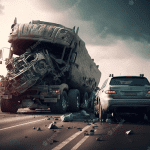
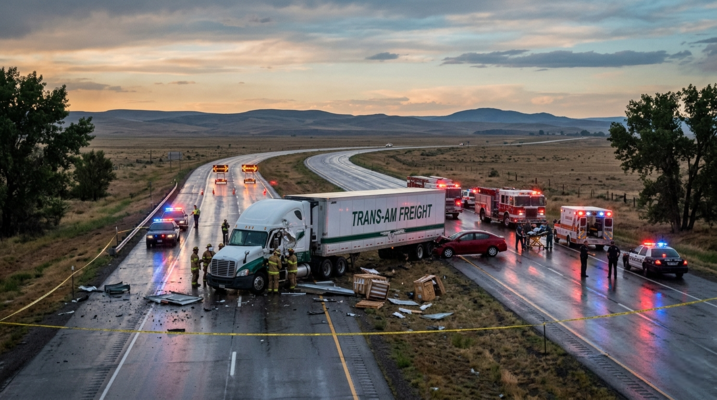
Trucks are everywhere on American roads. And the numbers are devastating, to say the least. Nearly 500,000 truck accidents were reported in the US in 2021 alone, killing over 5,000 people and seriously injuring around 110,000 more. These accidents are caused by driver fatigue, speeding, improper cargo securement, mechanical errors, etc.
When you look at truck accident statistics like that, the scale of the problem becomes hard to ignore. The thing about trucks is that they’re not just big cars. A fully loaded commercial truck can weigh up to 80,000 pounds.
It takes roughly double the stopping distance of a regular car. Even their turns need more space. And when something goes wrong, the consequences for everyone else on the road are usually severe.
Table of Content
1. Driver Fatigue
This one sits at the top of almost every study on truck accidents, and for good reason. Truck drivers spend hours on the road, sometimes far more hours than what the law says they legally should, under pressure from companies to hit tight delivery windows.
When you push past the point of real tiredness, your reaction time slows, your judgment gets worse, and your ability to notice what’s happening around you starts to fall apart.
2. Distracted Driving
Distracted driving causes accidents in regular cars all the time. In a truck, the consequences are just that much worse. Anything that takes a driver’s eyes or attention off the road, even briefly, can be enough.
At highway speeds, a truck travels something like 100 feet per second. A two-second glance at a phone means 200 feet covered without the driver actually looking at the road. At that size and weight, two seconds is a lot.
3. Speeding and Reckless Driving
Trucks need a lot of distance to slow down and stop. At highway speed, a fully loaded truck might need the length of two football fields to come to a complete stop.
Speeding in trucks is often about delivery pressure. Drivers are trying to make up time, running behind on a schedule, and pushing a little harder to get there. It’s even worse when they begin to indulge aggressive behaviors, cutting lanes, or following too closely.
The other thing about trucks moving too fast is that other drivers around them have almost no time to react either. A car can usually swerve or brake to avoid something. With a speeding truck bearing down, that option often disappears.
4. Mechanical Failure and Poor Maintenance
Trucks cover enormous distances. All those miles put real strain on brakes, tires, steering, and every other system in the vehicle. When maintenance gets skipped, either to save money or to keep the truck on the road instead of in the shop, things eventually fail.
The companies that cut corners on maintenance often know what they’re doing. It’s a calculated bet. They skip the service, keep the truck running, and hope nothing goes wrong. When something does go wrong, people get hurt.
5. Improperly Loaded Cargo
The weight distribution inside a trailer affects how the truck handles, how it brakes, and how stable it is through turns and on slopes.
If the cargo is uneven, the truck can become difficult to control. If cargo isn’t secured properly, it can shift while the truck is moving, suddenly changing where all that weight is sitting. That can cause rollovers, jackknifing, or the driver losing control entirely.
And when cargo falls off an open trailer onto a highway, it creates a hazard for every vehicle behind it. Logs,
The rules around cargo loading are strict for good reason. But loading is often done quickly, under time pressure, and sometimes by workers who haven’t been properly trained.
Key Takeaways
- Nearly 500,000 truck accidents happen in the US every year, killing thousands and seriously injuring tens of thousands more.
- Driver fatigue is the single biggest contributor to truck crashes.
- Distracted driving is involved in a huge proportion of large truck accidents.
- The consequences of a momentary lapse in a truck are far worse than in a regular car.
- Speeding reduces stopping distance dramatically, and at 80,000 pounds, there’s almost no margin for error.
- Improperly loaded or unsecured cargo can destabilize a truck mid-journey or create hazards for other drivers when it falls onto the road.