
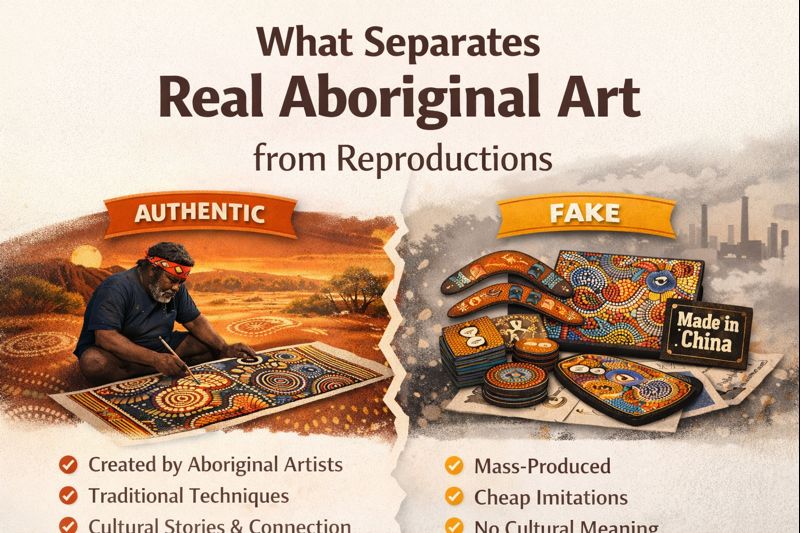
The Authentication Process: What Separates Real Aboriginal Art From Reproductions
With a rapidly growing Aboriginal art market, Aboriginal art is increasingly available to collectors around the world. But some processes in place help determine what is true Aboriginal art and what is merely a faithful reproduction of Aboriginal art with little to no connection to Aboriginal artists at all.
Getting it right is important for more than just your investment in art. It’s important for establishing connections to real artists, supporting Indigenous communities, and bringing home art that has actual connections to cultural practices. By purchasing authentic Aboriginal art, you support a practice thousands of years in the making that helps guarantee its continued existence for future generations.
Fortunately, it’s not as complex as it sounds. Once you know what to look for, it’s relatively easy, and even exciting, to find the real deal.
Table of Content
Documents of Authenticity
Authentic Aboriginal art comes with documentation proving where and by whom it was created. Best certificates are issued by accredited Aboriginal art centers. These community-based organizations work with Aboriginal artists, ensuring all documentation of their works includes the details of the artist’s finished work. Accredited centers promote high-quality output, including exhibitions, and maintain accurate records of works sold, all while working closely within the Aboriginal community.
Accredited art centers like Papunya, Yuendumu, or any in Utopia provide certificates that note the artist name, name of work, community located, and often even a photo of the artist with their work. Not meant to be fancy, these straightforward documents tell the story of how the work came from an artist’s hands to your home. Many provide direct contact information for the art center should you seek additional verification.
Well-known Aboriginal artists who work independently will also provide certificates for new and ongoing works. They should include the artist’s name and signature, some background information on the artist and specific details on the piece you’re purchasing. Some artists add thumbprints beside their signature for additional verification.
Unfortunately, less ethical sellers may create certificates to meet buyer expectations. This is why documentation is best when paired with additional authentication measures rather than relied upon alone.
Visual and Textural Cues
Genuine Aboriginal artworks have physical properties that tell you that human hands made something unique. Hand painted works feature brush strokes and varying texture of paint. Raises in individual pieces created years apart showcase differing paint application and all the little quirks that make humans unique painters.
Digital prints and reproductions lack texture. They’re suspiciously perfect and never include dots that line up or varied patterns and colors in supposedly painted works by the same artist.
The quality of canvases gives its own set of clues. Unique works come on good canvas stretched over wooden frames, not bits of fabric stapled to particle board. The back of a piece often holds gallery labels with pricing from previous exhibitions or practical wear and tear of time over the piece. If an “older” piece has a back with no wear or tear, this is something worth looking into further.
It’s also good to note that websites like aboriginal-art-australia.com connect people with locations to purchase verified pieces. This takes a good chunk of the legwork out of the process.
Community Connections
Proper Aboriginal artists are those connected to their community enough to show for it. They have documentation from exhibitions, they appear on art center rosters, and they have connections to specific communities showing they’re legitimate Aboriginal artists. When you search an artist’s name, you should have something, previous purchases and payments rendered, association with galleries or representations within Aboriginal art publications.
When an artist comes up with nothing, or worse, when their name appears rosters connected to wholly different kinds of art, it’s a problem. Real artists have styles that people recognize and works that evolve but remain mostly consistent for their style.
Community connections provide additional benefit. Aboriginal artworks are part of particular cultural community settings that generate deeper connections to particular language groups, country, and Dreamings. Connected to the country the works are created will be detailed accounts a legitimate artist can make about their works, and their communities will support them in their artistic practice.
Reproductions connect nothing but vague “Aboriginal style” patterns available for mass assembly through made up names with vague “Australian Aboriginal” descriptions.
Practical Pricing
Price point is an important factor in whether something is authentic or not. Legitimate Aboriginal artworks take time, skill, and cultural knowledge to create. Aboriginal artists should be paid well for their skill and costly galleries must charge prices that support community connection for ethical sales in great number.
This means not much happens under certain price points for legitimate Aboriginal art. Creation requires time too limited in combination with fair earnings to drop prices significantly. Thus, mass production of pieces created overseas supports these rock bottom prices and not legitimate artistic practice.
No need to have large sums of money to purchase authentic Aboriginal art pieces of smaller quality or works on paper connect buyers to legitimate pieces while still supporting past and future purchases by rising prices over time.
Red Flags
Once informed, certain factors stand out like sore thumbs:
- Sellers who can’t or won’t provide information on original point of purchase.
- Vague descriptions detailing “Aboriginal style” works versus pieces created by named artists.
- Multiple original pieces that look identical.
- Production outside Australia.
- Pressure to buy sooner than later without immediate options for verifying information.
Legitimate galleries welcome people asking questions about their purchases. They understand buyers must be confident in their purchases and will gladly provide documentation supporting facts proved true upon further inspection.
Why This Matters
The authentication process protects legitimate buyers beyond just their individual purchases. It supports maintained cultural integrity, proper Indigenous payment and connections supporting deeper meanings behind these works. With each piece chosen over reproduction comes money directed to Aboriginal people still working through their artistic integrations to provide for themselves in this modern world.
Genuine Aboriginal artworks tell stories and connect cultural knowledge to country in ways factory pieces never will; thus, authentication isn’t bureaucratic red tape it is blessing it ensures these deeper values connecting to its creation.
When informed about authentication, it turns people from casual buyers into educated participants in Aboriginal art’s ongoing narrative. Such knowledge protects investments, supports ethical practice, and retains cultural significance. Authentication continues to improve over time as more people learn what’s important to look out for; educated buyers supporting legitimate transactions bolster the process for everyone involved, it’s exciting to be part of that.