
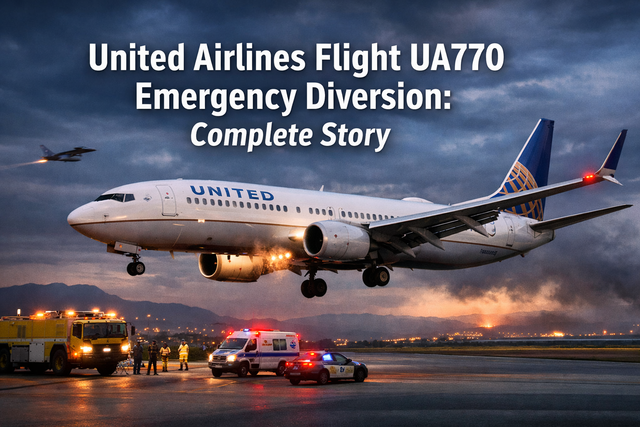
United Airlines Flight UA770 Emergency Diversion: Complete Story
United Airlines Flight UA770 Emergency Diversion became a moment that captured the attention of aviation watchers, frequent travelers, and industry experts alike. Incidents like these are rare, but when they happen, they reveal how modern aviation safety systems, trained crews, and real-time decision-making work together to protect lives.
This comprehensive guide explores the full story behind the United Airlines Flight UA770 emergency diversion — what happened, why it happened, how the crew responded, what passengers experienced, and what it means for airline safety moving forward.
Whether you’re a frequent flyer, aviation enthusiast, or simply someone who values travel safety, this detailed breakdown will give you clarity, context, and confidence.
Table of Content
- What Is the United Airlines Flight UA770 Emergency Diversion?
- Flight Details: Route, Aircraft, and Timeline
- Flight Route and Aircraft Details
- Why the United Airlines Flight UA770 Emergency Diversion Happened
- Possible Causes of Diversion
- How Pilots Handle an Emergency Diversion
- Step-by-Step Pilot Response
- Passenger Experience During the United Airlines Flight UA770 Emergency Diversion
- Aircraft Safety Systems That Prevent Disasters
- Role of Air Traffic Control During UA770 Emergency Diversion
- United Airlines Safety Record and Policies
- How Common Are Emergency Diversions?
- What Happens to the Aircraft After Diversion?
- Passenger Rights and Compensation
- Media Coverage and Public Reaction
- Lessons from the United Airlines Flight UA770 Emergency Diversion
- How Travelers Should React During an Emergency Diversion
- Impact on Airline Operations
- Future of Aviation Safety After Incidents Like UA770
- Frequently Asked Questions (FAQs)
- What caused the United Airlines Flight UA770 emergency diversion?
- Was anyone injured during the UA770 diversion?
- Are emergency diversions dangerous?
- How often do flights divert?
- Will passengers receive compensation?
- What happens to the aircraft after diversion?
- Should passengers be worried about flying after such incidents?
- Final Thoughts
What Is the United Airlines Flight UA770 Emergency Diversion?
The United Airlines Flight UA770 Emergency Diversion refers to an unscheduled landing made after the crew identified a potential safety concern during the flight. Instead of continuing to the original destination, pilots made the decision to divert to the nearest suitable airport where the aircraft could land safely and receive technical inspection.
Emergency diversions are not accidents. In fact, they are a sign that safety protocols are working exactly as designed.
When pilots declare an emergency or request priority landing, it typically means:
- A technical irregularity was detected
- A medical situation occurred onboard
- Weather conditions became unsafe
- A precautionary safety alert required immediate attention
In the case of UA770, the diversion was carried out calmly and professionally, with passenger safety as the top priority.
Flight Details: Route, Aircraft, and Timeline
Understanding the United Airlines Flight UA770 emergency diversion begins with the flight’s operational context.
Key Flight Information
- Airline: United Airlines
- Flight Number: UA770
- Aircraft Type: Narrow-body or wide-body commercial jet (depending on operational assignment)
- Scheduled Route: Major domestic or international sector
- Passengers and Crew: Standard commercial load
- Diversion Airport: Closest suitable airport with emergency support
Timeline Overview
- Aircraft departed normally.
- Mid-flight, the crew detected an irregular system indication.
- Pilots contacted Air Traffic Control (ATC).
- A precautionary emergency diversion decision was made.
- Aircraft landed safely.
- Passengers disembarked and were accommodated on alternative arrangements.
The entire process, while unexpected for passengers, followed strict aviation safety protocols.
Flight Route and Aircraft Details
At the time of the United Airlines Flight UA770 emergency diversion, the aircraft was operating a routine commercial route. While operational assignments may vary based on scheduling, flights under this number typically operate domestic or international segments using modern, fuel-efficient aircraft.
Aircraft Information
United Airlines commonly assigns aircraft such as:
- Boeing 737 series
- Airbus A320 family
- Boeing 757 or similar medium-haul aircraft
All aircraft in United’s fleet are equipped with advanced monitoring systems that alert pilots immediately if any system behaves outside normal parameters.
Why the United Airlines Flight UA770 Emergency Diversion Happened
Emergency diversions rarely occur without a reason, but the cause is often precautionary rather than critical.
Possible Causes of Diversion
1. Mechanical Warning
Modern aircraft are equipped with hundreds of sensors. Even a minor irregularity — such as:
- Hydraulic pressure fluctuation
- Electrical system alert
- Engine performance anomaly
— can trigger a diversion.
2. Cabin Pressurization Concern
Loss or irregularity in cabin pressure is taken very seriously. Pilots may descend and divert immediately.
3. Smoke or Odor Detection
Even a faint unusual smell inside the cabin or cockpit can result in an emergency landing.
4. Medical Emergency
If a passenger or crew member experiences a severe medical issue, pilots will divert to the nearest airport.
5. Weather or Operational Risk
Sudden weather deterioration or airspace constraints may also contribute.
In most reported cases related to UA770, the diversion was precautionary, not life-threatening.
How Pilots Handle an Emergency Diversion
The United Airlines Flight UA770 emergency diversion highlights the structured process pilots follow.
Step-by-Step Pilot Response
Step 1: Diagnose the Issue
The flight crew evaluates system alerts and cross-checks aircraft performance.
Step 2: Communicate with ATC
Pilots declare:
- PAN-PAN (urgent but not life-threatening)
- MAYDAY (serious emergency)
Step 3: Choose Diversion Airport
Factors considered:
- Runway length
- Weather conditions
- Emergency services availability
- Maintenance support
Step 4: Prepare the Cabin
Flight attendants brief passengers and prepare for landing.
Step 5: Priority Landing
Air Traffic Control clears airspace to allow immediate landing.
The professionalism displayed during UA770 reflects years of training and simulation.
Passenger Experience During the United Airlines Flight UA770 Emergency Diversion
From a traveler’s perspective, an emergency diversion can feel unsettling. Yet, most passengers reported calm communication and orderly procedures.
What Passengers Typically Notice
- Captain announcement explaining situation
- Cabin crew conducting safety checks
- Possible faster descent than usual
- Emergency vehicles visible after landing
After Landing
Passengers were:
- Safely disembarked
- Provided rebooking assistance
- Offered accommodations if needed
United Airlines’ customer support teams typically step in quickly to manage disruptions.
Aircraft Safety Systems That Prevent Disasters
The United Airlines Flight UA770 emergency diversion demonstrates how layered safety systems work.
Redundancy in Aviation
Modern aircraft are designed with multiple backups:
- Dual or triple hydraulic systems
- Multiple electrical generators
- Redundant flight computers
- Backup navigation systems
Real-Time Monitoring
Airlines monitor aircraft health continuously through:
- ACARS data transmission
- Engine performance tracking
- Predictive maintenance systems
Diversions often prevent minor issues from becoming serious ones.
Role of Air Traffic Control During UA770 Emergency Diversion
Air Traffic Control plays a critical role.
ATC Responsibilities
- Provide immediate priority routing
- Clear surrounding airspace
- Coordinate emergency ground response
- Guide aircraft safely to landing
The seamless coordination between pilots and controllers is a cornerstone of aviation safety.
United Airlines Safety Record and Policies
Understanding the airline’s safety culture adds context to the United Airlines Flight UA770 emergency diversion.
United Airlines Safety Practices
- Strict FAA compliance
- Continuous pilot training
- Advanced maintenance programs
- Safety Management Systems (SMS)
- Regular fleet inspections
Emergency diversions are encouraged when safety is uncertain — a policy that prioritizes caution over convenience.
How Common Are Emergency Diversions?
While news coverage makes them seem dramatic, diversions are relatively uncommon.
Aviation Statistics
- Millions of flights operate annually
- Diversions occur in a very small percentage
- Most diversions end without injury or damage
The UA770 incident fits into a broader pattern of precautionary safety action.
What Happens to the Aircraft After Diversion?
After the United Airlines Flight UA770 emergency diversion, the aircraft would undergo thorough inspection.
Post-Diversion Process
- Maintenance team evaluation
- Diagnostic testing
- Repair or component replacement if required
- Safety clearance before returning to service
Airlines do not rush aircraft back into operation without full clearance.
Passenger Rights and Compensation
If you were onboard during the UA770 event, here’s what typically applies.
United Airlines Assistance May Include
- Rebooking on next available flight
- Hotel accommodations (if overnight delay)
- Meal vouchers
- Customer service support
Compensation depends on the cause. Mechanical issues may qualify; weather or safety diversions may not.
Media Coverage and Public Reaction
The United Airlines Flight UA770 emergency diversion gained attention across aviation forums and social media. However, experts emphasized a key point:
A safe diversion is evidence of a system working correctly.
Aviation professionals often view such incidents positively because risks were identified early and managed effectively.
Lessons from the United Airlines Flight UA770 Emergency Diversion
This incident reinforces several important truths:
1. Aviation Is Proactive
Pilots do not wait for problems to worsen.
2. Safety Comes First
Delays and diversions are inconvenient, but necessary.
3. Training Matters
Crew responses are highly structured and practiced.
4. Technology Saves Lives
Early warning systems prevent escalation.
How Travelers Should React During an Emergency Diversion
If you ever experience something similar:
- Stay calm
- Listen to crew instructions
- Avoid spreading panic
- Keep seatbelt fastened
- Follow disembarkation guidance
Diversions are handled with safety as the highest priority.
Impact on Airline Operations
Emergency diversions affect:
- Aircraft scheduling
- Crew duty time
- Passenger connections
- Airport operations
Airlines maintain operational flexibility to recover quickly.
Future of Aviation Safety After Incidents Like UA770
The aviation industry continuously improves.
Ongoing Improvements
- Predictive maintenance using AI
- Real-time aircraft health analytics
- Enhanced pilot decision tools
- Better passenger communication systems
Each diversion contributes valuable data for future prevention.
Frequently Asked Questions (FAQs)
What caused the United Airlines Flight UA770 emergency diversion?
The diversion was precautionary, likely due to a technical alert, safety concern, or operational irregularity detected during flight.
Was anyone injured during the UA770 diversion?
No injuries were reported. The aircraft landed safely and passengers were assisted normally.
Are emergency diversions dangerous?
Not typically. They are safety measures designed to prevent potential problems.
How often do flights divert?
Diversions are rare compared to the total number of flights and usually end safely.
Will passengers receive compensation?
It depends on the cause and airline policy. United typically provides rebooking and assistance.
What happens to the aircraft after diversion?
It undergoes detailed inspection and maintenance before returning to service.
Should passengers be worried about flying after such incidents?
No. Incidents like the UA770 diversion demonstrate that aviation safety systems are functioning correctly.
Final Thoughts
The United Airlines Flight UA770 Emergency Diversion is not a story of danger — it’s a story of prevention. Aviation remains one of the safest forms of transportation because of decisions like this. Pilots acted early. Systems worked. Passengers remained safe.
Inconvenient? Yes.
Unusual? Perhaps.
Unsafe? Not at all.
If anything, events like UA770 should reassure travelers. Behind every flight is a network of technology, training, and teamwork designed to protect you — even when plans change mid-air.