
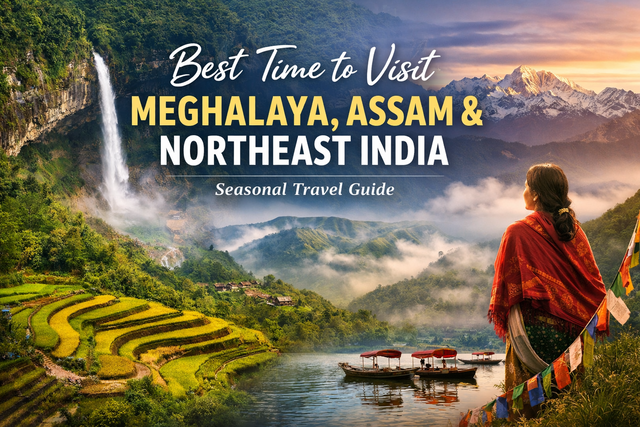
Best Time to Visit Meghalaya, Assam & Northeast India: Seasonal Travel Guide
Northeast India is one of the most beautiful yet underrated travel regions in the country. From misty hills and crystal-clear rivers to wildlife reserves and vibrant cultural festivals, the region offers experiences that feel refreshingly different from mainstream destinations. If you are planning a trip, understanding the seasons can help you make the most of your journey.
Whether you’re looking at Meghalaya tour packages, Assam tour packages, or broader Northeast tour packages, choosing the right time of year can completely change your travel experience.
Table of Content
Winter (October to February): The Best Season to Visit
For most travelers, winter is the ideal time to explore Northeast India. The weather remains pleasant, skies are clear, and many wildlife parks reopen for visitors. Temperatures are cool and comfortable, making sightseeing easy across states like Meghalaya and Assam.
This is also the best season to explore popular destinations such as Shillong, Cherrapunji, and Dawki in Meghalaya. During winter, the roads are easier to navigate, trekking routes are accessible, and the landscapes look spectacular.
Many Meghalaya tour packages are designed around this season because it’s perfect for visiting attractions like living root bridges, Mawlynnong village, and the famous crystal-clear Umngot River in Dawki.
In Assam, winter is particularly exciting for wildlife lovers. National parks such as Kaziranga and Manas remain open between November and April, offering the best opportunities to spot the famous one-horned rhinoceros and other wildlife species.
That’s why many Assam tour packages include jeep safaris or elephant safaris during this period.
Winter is also the festival season in the Northeast. Events like the Brahmaputra Festival celebrate the region’s culture with music, performances, and local traditions.
For travelers seeking comfortable weather and diverse experiences, winter is the most recommended time to book Northeast tour packages.
Spring (March to April): Pleasant Weather & Cultural Experiences
Spring is another fantastic time to travel across Northeast India. The weather begins to warm slightly but remains comfortable enough for sightseeing, outdoor activities, and exploring nature.
In Assam, spring is when the famous Rongali Bihu festival takes place. This festival celebrates the Assamese New Year with traditional dance, music, and feasts, offering travelers a chance to experience local culture firsthand.
Many Assam tour packages highlight this time of year because it allows visitors to combine wildlife exploration with cultural festivals.
Spring is also a great time for trekking in Meghalaya. The forests are green, waterfalls still flow gently, and the weather is ideal for exploring caves and nature trails. Travelers booking Meghalaya tour packages during this period often enjoy a quieter and more relaxed travel experience compared to peak winter months.
Overall, spring strikes a perfect balance between pleasant weather and fewer crowds, making it an excellent option for those choosing Northeast tour packages.
Summer (May to June): A Cool Escape from the Plains
While many parts of India experience intense heat during summer, the Northeast remains relatively cool and pleasant. Temperatures in many hill regions range between 15°C and 25°C, making it a refreshing escape from the scorching heat of the plains.
Destinations like Shillong, Umiam Lake, and Cherrapunji become particularly attractive during this time. The hills remain lush and scenic, and outdoor activities such as hiking, boating, and exploring local villages are still enjoyable.
For families planning vacations during school holidays, Meghalaya tour packages and Northeast tour packages during summer can be a great choice.
Monsoon (July to September): The Season of Waterfalls
The monsoon season transforms the Northeast into an incredibly lush and dramatic landscape. Meghalaya, known as the “abode of clouds,” becomes especially beautiful during this time as waterfalls reach their full power.
Spectacular waterfalls like Nohkalikai and the Seven Sisters Falls appear at their most impressive during the rainy season.
However, heavy rainfall can also cause travel disruptions. In some cases, the region experiences intense downpours that lead to flooding or landslides, especially in Assam and Meghalaya.
Wildlife parks in Assam also close during the monsoon because of rising water levels in the Brahmaputra river basin.
Despite these challenges, adventurous travelers and photographers often prefer monsoon travel because the landscapes become incredibly vibrant. For those who don’t mind occasional rain, off-season Meghalaya tour packages and Northeast tour packages can offer a unique experience with fewer crowds and lush scenery.
How to Plan Your Northeast Trip
When planning your itinerary, most travelers combine Meghalaya and Assam in a single trip. A typical route includes Guwahati, Shillong, Cherrapunji, Dawki, and Kaziranga National Park.
Many modern Northeast tour packages include this circuit because it showcases the region’s best landscapes, wildlife, and cultural experiences.
For instance, travelers can explore Meghalaya’s scenic waterfalls and villages before heading to Assam to experience wildlife safaris and river cruises on the Brahmaputra.
Tour companies often design Meghalaya tour packages and Assam tour packages in a way that balances adventure, relaxation, and cultural exploration.
Making Travel Easier with Curated Packages
Planning travel in Northeast India can sometimes be complex due to distances, permits, and connectivity between destinations. This is why many travelers prefer curated travel itineraries.
Thomas Cook domestic holiday packages offer thoughtfully designed Meghalaya tour packages, Northeast tour packages, and Assam tour packages that cover major attractions, comfortable stays, and guided sightseeing experiences. These packages help travelers explore the region’s highlights—from Shillong’s hills to Kaziranga’s wildlife—without worrying about logistics.