Smart Ways Contractors Reduce Downtime on Land Clearing Projects
Some sounds on a job site are comforting, like the hum of engines running, mulchers chewing through brush, and operators calling out directions. But the moment one machine goes silent, the whole place feels off. Work slows, people start troubleshooting, and suddenly the day is not moving the way it should.
Contractors know downtime has a way of sneaking in through small things. A worn tool, a missing part, or equipment that just is not built for the workload. That is why many crews spend time researching reliable machines before a project begins, even checking listings like a gyro trac for sale to find equipment that can handle serious clearing work. A little planning goes a long way when the goal is to keep machines running and crews productive.
So here are a few simple ways contractors keep land clearing projects moving instead of letting one stubborn machine ruin the whole day.
Table of Content
- Plan the Day Before the Machines Start
- Use Machines That Can Handle Multiple Jobs
- Keep Spare Parts Within Reach
- Train Operators to Spot Problems Early
- Choose Equipment Built for Tough Conditions
- Keep the Work Area Organized
- Schedule Maintenance Before Problems Appear
- Keep Communication Simple and Clear
- Wrapping It All Up
Plan the Day Before the Machines Start
You would be surprised how many delays happen before any machine even starts. Crews arrive, equipment comes off the trailer, and suddenly, a tool cannot be found, or a task was not explained clearly.
A little planning the night before can save hours later. Smart contractors often take ten minutes to go over the next day’s tasks. The goal is simple here. Make sure everyone knows what needs to happen and which machines will handle each job.
Some teams even keep a short checklist:
- Which equipment will be used tomorrow
- Any attachments needed for the day
- Fuel levels and quick inspections
- Access points and site layout
Nothing fancy. Just clear direction so the crew starts the day moving instead of figuring things out on the fly.
Use Machines That Can Handle Multiple Jobs
Job sites move faster when equipment can adapt to different tasks without constant switching. Contractors who rely on versatile machines tend to see fewer slowdowns during busy clearing projects.
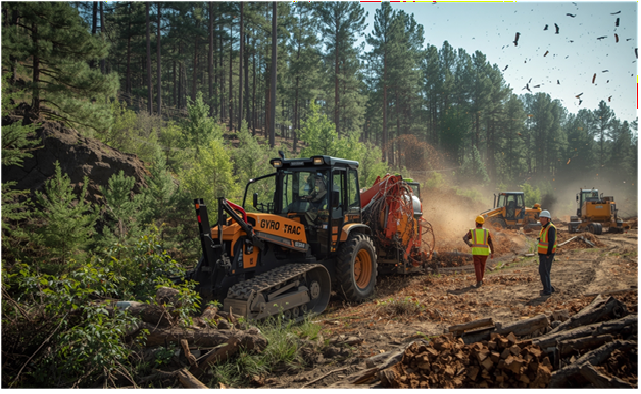
Take a mulching machine, for example. One solid unit can handle work that might otherwise call for multiple machines. That makes life easier for crews because they can keep moving instead of constantly switching equipment.
Some contractors keep an eye out for equipment upgrades too. It is not unusual to see operators browsing listings for a gyro trac for sale when they want a machine built for aggressive vegetation clearing and rough terrain. The right machine for the job can move through heavy brush and small trees without slowing everyone else down on site.
The idea is simple. The right machine removes unnecessary steps.
Keep Spare Parts Within Reach
Nothing drains momentum faster than waiting days for a replacement part. Land clearing equipment works in brutal conditions. Dust, wood debris, rocks, and long operating hours push machines to their limits.
Experienced contractors prepare for that reality.
Veteran contractors usually travel with a small backup supply. Cutting tools, bolts, belts, and filters usually take the most wear during daily operations. If one fails, a quick swap is often all it takes to get the machine running again.
Teams that deal with few repairs along the way almost never lose an entire day to one stubborn part.
Train Operators to Spot Problems Early
Machines often give subtle warning signs before something actually fails. A strange vibration. A sound that feels off. A drop in cutting performance.
Operators who know their equipment well can catch those signs early.
That awareness allows crews to stop, check the machine, and fix a minor issue before it grows into a bigger problem. It is a simple habit, but it saves time in the long run. A quick conversation between operators at the end of each shift can also help. People share what they noticed during the day and flag anything that might need attention.
Those small check ins keep equipment healthy and projects on track.
Choose Equipment Built for Tough Conditions
Land clearing machines face rough environments every day. Thick vegetation, uneven ground, and constant debris take a toll on equipment.
That is why contractors pay attention to durability when choosing machinery. Many crews researching equipment upgrades often scan listings for a gyro trac for sale because these machines are known for handling heavy mulching work in demanding terrain. Machines that can power through dense vegetation without constant stops allow crews to maintain steady progress across the site.
It sounds obvious, but stronger equipment often means fewer interruptions.
Keep the Work Area Organized
A messy job site quietly creates delays.
- Tools get misplaced.
- Machines block access routes.
- Operators waste time moving equipment just to reach the next work zone.
Contractors who maintain simple organization habits see smoother workflows. For example, keeping a designated spot for attachments and spare tools saves time during machine changes. Clear paths across the site also help operators move equipment quickly without worrying about obstacles or tight maneuvering.
It does not require a perfectly clean job site. Just enough structure so crews are not constantly searching for things.
Schedule Maintenance Before Problems Appear
Preventive maintenance sounds boring, but it is one of the strongest defenses against downtime.
Instead of waiting for machines to fail, experienced contractors schedule regular inspections and service checks. Oil changes, filter replacements, and blade inspections become routine tasks.
These small efforts keep machines running smoothly throughout long projects.
Contractors who monitor equipment closely sometimes explore listings for a gyro trac for sale when older machines begin showing repeated maintenance issues. Replacing equipment at the right time can reduce repair delays that disrupt entire projects.
In many cases, a reliable machine saves far more time than squeezing a few extra seasons out of worn equipment.
Keep Communication Simple and Clear
Many job site delays come from confusion rather than equipment problems. Someone misunderstood the instructions. Another crew member waited for direction that never came. Meanwhile, machines sit idle.
Good communication fixes that quickly! Short check ins during the day help crews stay aligned. Operators know what area they are clearing next. Truck drivers know where material should be moved. Everyone works toward the same goal.
Simple communication habits keep the project flowing and reduce those frustrating moments where machines sit still for no good reason.
Wrapping It All Up
Downtime will always exist in construction. Machines work hard and job sites rarely go exactly as planned. Still, the contractors who stay productive are the ones who prepare for those challenges.
A little planning, dependable equipment, trained operators, and organized job sites all contribute to smoother operations. None of these ideas require complicated systems or huge budgets. They are small habits that experienced crews build over time.
And honestly, that is how most successful contractors approach their work. They focus on steady progress, practical decisions, and equipment that keeps moving day after day. Because at the end of a long shift, the best sound on a land clearing project is still the same one everyone loves to hear: machines running and work getting done.