Vitamin B2 Rich Foods Your Kids Should Be Eating Every Day
Proper nutrition is crucial for supporting children’s overall development and meeting their daily energy requirements. Riboflavin, also known as vitamin B2, is an important nutrient needed for the body that converts food into usable energy.
Hence, Vitamin B2-rich foods make a useful addition to a child’s daily meals, ensuring a balanced diet without complicating mealtimes. Let’s explore how you can considerately add these foods to your child’s daily routine.
Top vitamin B2-rich foods to include daily
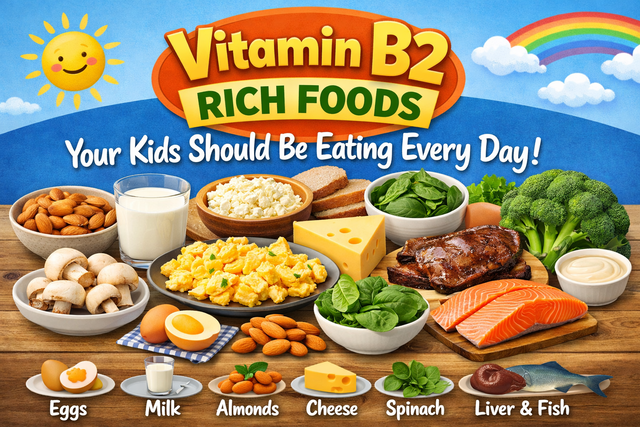
Adding a variety of everyday foods can make a significant difference. The following are some of the regularly proposed options:
- Dairy products: Some basic additions that can be quickly added to breakfast or snacks are milk, yogurt, and cheese.
- Eggs: Eggs can be boiled, scrambled, or made into omelettes and are easy to cook.
- Green vegetables: Prepare healthy soups and nutrient-rich curries with leafy veggies like spinach, broccoli, and kale.
- Whole grains: Oats, brown rice, and whole wheat bread can be included in most meals.
- Nuts and seeds: Provide almonds and sunflower seeds in small portions.
Regular intake of these vitamin B2-rich foods can be beneficial in balancing out diets.
The importance of vitamin B2 in children
Knowing the importance of vitamin B2 can make you realize how it helps in various essential activities in the daily growth of a child. Vitamin B2 is a water-soluble vitamin that helps the body function in daily activities. It is generally associated with:
- Helping in the energy metabolism.
- Supporting normal growth and development.
- Assistance in taking care of healthy skin and eyes.
As the body does not store high levels of riboflavin, physicians frequently advise consuming riboflavin-rich foods regularly in meals.
Easy ways of introducing Vitamin B-rich foods into the diet of your child
What can you do to make meals more attractive?
It does not have to be difficult to make good food delicious. You can try:
- Adding spinach to fruit smoothies makes them less bitter.
- Including a cheese slice in a sandwich or pasta.
- Preparing eggs in fun shapes or styles.
- Mixing nuts or seeds with yogurt or cereals.
If your child is a picky eater, try introducing new food one at a time. You can present the meal in an eye-catching way by preparing it in a colorful way or in fun shapes. Offering new foods and serving them with familiar foods would help children try the new foods without feeling forced. In the long run, such minor efforts can help children feel more at ease trying a variety of foods.
How to build a balanced plate?
Instead of focusing on a single nutrient, it is often better to have a look at the meal as a whole. By incorporating food groups which contain vitamin B2 and other essential nutrients, you can achieve a balanced diet. An easy food concept would entail:
- Whole grains like brown rice or whole wheat bread.
- Another source of protein includes eggs or dairy.
- A portion of vegetables and fruits.
- A handful of nuts or seeds.
Such a mix can help ensure diversity and uniformity.
Things to keep in mind
When you are planning your child’s meals, keep in mind to:
- Rotate several foods throughout the week.
- Serve sensible sizes according to age and appetite.
- Have scheduled times for meals and snacks.
- Consult a professional, especially in case of any concerns.
These are a few useful steps in making mindful and informed decisions.
Final thoughts
Food fortification with vitamin B2 does not necessarily require significant changes to everyday life. Additions like dairy products, eggs, leafy vegetables, and whole grains can be slowly added, thereby adding nutritional variety to the table.
Alternatively, you could be creative with other recipes or meal presentations to keep the children in your house entertained. With time, balanced, high-frequency food options can be used to establish healthy eating habits and make it enjoyable and part of your child’s daily life.