
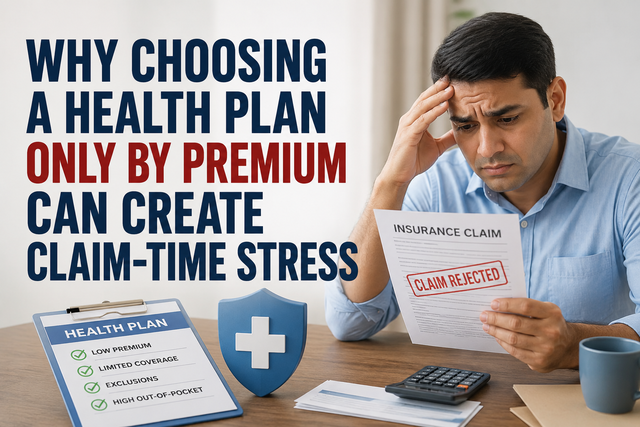
Why Choosing a Health Plan Only by Premium Can Create Claim-Time Stress
Premium is often the first detail people notice while comparing health insurance. It is easy to assume that a lower premium means a smarter purchase, especially when the policy appears to cover the basics.
However, claim-time comfort depends on more than the amount paid annually. A health plan should support you when hospital bills, treatment decisions, and paperwork already feel overwhelming.
Table of Content
Why Premium Alone Does Not Reflect Policy Quality
A premium shows what you pay for the policy, but it does not fully explain how the policy may respond during a claim. While comparing the best health insurance companies for your personal needs, it is important to read the coverage terms, limits, and claim conditions carefully.
- A lower premium may come with higher sharing of expenses.
- Some plans may have room rent restrictions or treatment-wise limits.
- Network hospital access can affect cashless claim convenience.
- Waiting periods and exclusions may influence claim eligibility.
- Claim experience depends on documentation, policy wording, and admissibility.
Common Claim-Time Problems in Low-Premium Plans
Budget-friendly plans can be useful, but limited coverage terms may create unexpected stress when a hospitalisation claim is processed.
Higher Out-of-Pocket Expenses
A plan with a lower premium may require the policyholder to pay more from personal savings during treatment. This can happen because of deductibles, co-payment clauses, non-payable items, or limited coverage for certain hospital expenses.
- The approved claim amount may be lower than the bill.
- The insured person may need to arrange funds quickly.
- Small exclusions can add up during hospitalisation.
- A wider coverage review can help avoid surprise expenses.
Partial Claim Settlements
Insurers assess claims as per policy terms, medical necessity, admissible expenses, and supporting documents. This is why people comparing health insurance plans for family should look beyond premiums and check how the plan treats different medical costs.
- Sub-limits may apply to specific procedures.
- Some expenses may be payable only up to defined limits.
- Missing documents can delay assessment.
- Clear policy understanding can reduce confusion.
Non-Payable Medical Expenses
During hospitalisation, the final bill may include items that are not payable under the policy. These can vary as per policy terms and claim guidelines. Policyholders often notice these deductions only when the claim summary is shared.
- Consumables and administrative charges may need review.
- Non-medical items may not qualify for reimbursement.
- Hospital billing format can affect claim clarity.
- Reading policy documents early helps set expectations.
Room Upgrade Leading to Claim Reduction
Room rent eligibility is an important feature in health insurance. When a policy has a room rent limit, and the insured person chooses a higher category room, proportionate deductions may apply to related expenses as per policy terms.
- A room upgrade can affect the payable claim amount.
- Associated charges may be recalculated.
- Choosing an eligible room category can reduce disputes.
- Room rent clauses deserve attention before purchase.
Treatments Excluded from Coverage
Every health insurance policy has defined inclusions, exclusions, and waiting periods. Some treatments may not be covered immediately, while others may be payable only when specific conditions are met.
- Pre-existing disease waiting periods may apply.
- Certain treatments may need specific policy eligibility.
- Cosmetic or non-medically necessary procedures may be restricted.
- Policy wording should be reviewed before finalising coverage.
Key Policy Features That Affect Claims
Claim outcomes depend on several policy features, not just the premium. Understanding these terms helps you choose coverage with better clarity.
Sum Insured and Coverage Limits
The sum insured decides the maximum policy coverage available during the policy period. For families, an adequate coverage amount can be important because multiple members may need medical care.
Room Rent Restrictions
Room rent limits define the eligible hospital room category or payable room charges. These limits can influence the claim amount, especially when treatment takes place in a higher category room.
Disease-Specific Sub-Limits
Some policies may place limits on certain illnesses or procedures. These sub-limits can affect how much of the treatment cost is payable during claim assessment.
Co-Payment Clauses
A co-payment clause means the policyholder shares a portion of the admissible claim. This can lower the premium, but it may increase personal payment during hospitalisation.
Deductibles and Waiting Periods
Deductibles require the policyholder to bear a defined amount before claim payment starts. Waiting periods decide when coverage becomes active for certain conditions or treatments.
Network Hospital Availability
Network hospitals can support cashless treatment, subject to policy terms and claim approval. A strong hospital network near your location can make the claim process more convenient.
Conclusion
Choosing a health plan based only on premiums may look practical at first, but it can create pressure during claims if the policy has limits you did not expect. A better approach is to compare coverage, exclusions, waiting periods, room rent terms, claim process, and hospital network together. The right plan is not always the lowest-priced one. It is the one that suits your health needs, family situation, and financial comfort.