
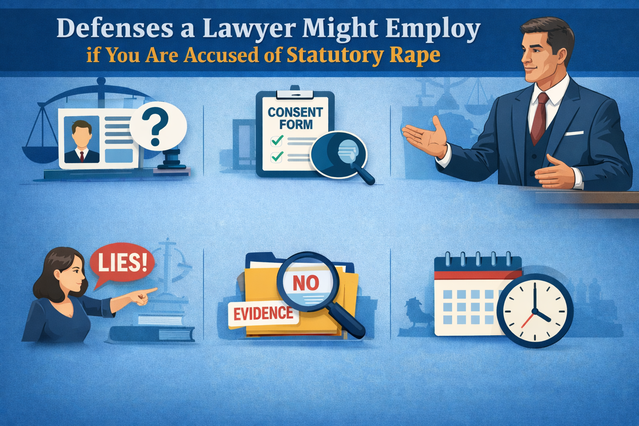
Defenses a Lawyer Might Employ if You Are Accused of Statutory Rape
Statutory rape refers to sexual activity with someone below the age of consent, even if the encounter appeared consensual. These cases are often complex.
Even situations involving an 18-year-old sex partner can raise questions about consent, age laws, and intent. Only a skilled criminal defense lawyer can help navigate these complexities, protect your rights, and identify potential defenses that may apply to your situation.
Understanding the possible defenses is crucial for anyone facing such accusations. While no two cases are exactly alike, there are common strategies lawyers use to defend clients effectively.
Table of Content
1. Mistake of Age Defense
One common defense in statutory rape cases is the “mistake of age.” This strategy is used when the accused reasonably believed the other person was above the legal age of consent.
A criminal defense lawyer may present evidence like social media profiles, text messages, or other documentation that led the accused to believe the partner was of legal age.
This defense is highly fact-specific and depends on whether the court finds the belief reasonable. It’s important to remember that some states do not allow mistake-of-age defenses, so knowing local laws is critical.
This approach is often relevant in cases involving an 18-year-old sex partner where the legal age of consent may vary depending on state laws.
2. Lack of Knowledge or Intent
Intent can be a key factor in statutory rape cases. Lawyers may argue that the accused lacked the intent to commit a crime. Evidence of ignorance regarding the minor’s true age can support this defense.
Successfully showing a lack of knowledge or intent may reduce the severity of the charges or lead to dismissal. Even when the law treats statutory rape as a strict liability offense, highlighting the absence of malicious intent can help a lawyer negotiate favorable outcomes.
3. Insufficient Evidence by the Prosecution
In many cases, the prosecution’s evidence may not be as strong as it initially appears. A criminal defense lawyer will closely examine whether the state can meet its burden of proof.
The prosecution must prove every element of the charge beyond a reasonable doubt.
Gaps in timelines, unclear testimony, or missing documentation can weaken the case.
If evidence is circumstantial or inconsistent, it may not be enough to sustain a conviction.
Challenging the sufficiency of evidence is a critical part of building a strong defense.
4. Violations of Constitutional Rights
Law enforcement must follow strict procedures during investigations. If your rights were violated at any stage, that violation could significantly impact the case.
Illegal searches or seizures may lead to evidence being suppressed.
Improper interrogation techniques or failure to read Miranda rights can weaken the prosecution’s case.
A criminal defense lawyer will review whether law enforcement followed proper legal protocols.
Procedural errors can sometimes result in reduced charges or dismissal.
5. False Allegations or Misinterpretations
In some instances, accusations may arise from misunderstandings or false claims. While sensitive, exploring this possibility can be an important part of a defense strategy.
Lawyers may investigate potential motives behind the allegation.
Character references, personal history, and patterns of behavior may be presented to support credibility. Handling this approach carefully is essential to avoid appearing dismissive of the alleged victim.
Summary
Facing a statutory rape charge is overwhelming, but a criminal defense lawyer plays a vital role in:
- Providing clarity on the evidence that the accused reasonably believed the partner was of legal age.
- Demonstrating no knowledge or intent to commit a crime.
- Challenging the prosecution’s ability to prove its case.
- Identifying unlawful police conduct or procedural errors.
- Investigating claims that may be inaccurate or misunderstood.
Acting promptly and maintaining open communication with your lawyer is crucial for achieving the best outcome in these sensitive cases.