
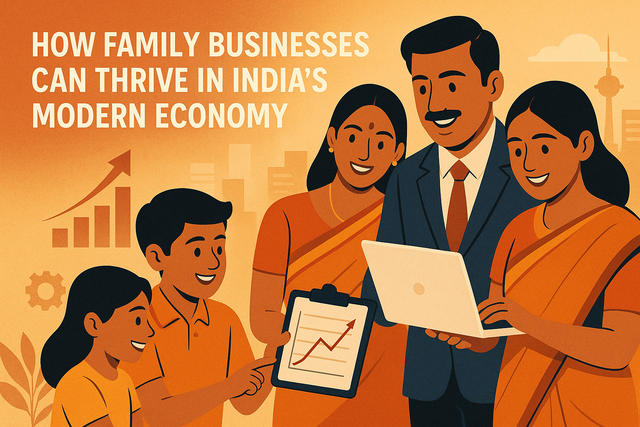
How Family Businesses Can Thrive in India’s Modern Economy
Family businesses have long been the backbone of India’s economic and cultural identity. From small kirana stores to large companies, these enterprises have grown on generations of trust, relationships, and traditional knowledge. Historically, Indian family firms operated in stable, predictable markets where customer loyalty, personal reputation, and community ties ensured stability.
However, the business environment today is very different. Rapid digitalization, global competition, evolving consumer expectations, and regulatory shifts have forced family-run enterprises to rethink the way they operate. Many traditional methods that once guaranteed success no longer hold the same power. To thrive in this modern economy, family businesses must blend their inherited strengths with contemporary business practices and a forward-looking mindset. This blog explores how family businesses in India can adapt, evolve, and build sustainable success for the future.
Table of Content
How Family Businesses Can Adapt in Today’s Economy
Below are the essential keys to leading successful change in a family business, along with what you must focus on to thrive in the modern Indian market.
1. Strengthening Strategic Decision-Making
Traditional family firms often relied on intuition and experience. While these strengths remain valuable, today’s decisions must be backed by data, market insights, and structured strategic thinking. To strengthen strategic decision-making, businesses should use data analytics and digital tools to understand trends, encourage diverse viewpoints rather than centralised decision control, and adopt structured processes for evaluating risks and opportunities. This shift allows the business to respond to market changes faster and with greater accuracy.
2. Professionalizing Management
One of the biggest challenges family firms face is balancing family involvement with organisational professionalism. Professionalising operations ensures transparent systems for accountability and reduced conflict during generational transitions. Many Indian family enterprises now hire CEOs, CFOs, or department heads from outside the family to bring in expertise and modern practices.
3. Succession Planning for the Next Generation
Smooth succession has always been central to family business success. In today’s landscape, it has become even more critical. Modern succession planning should include early exposure to business operations, formal education in leadership and management, and clearly defined roles for all successors. Next-generation leaders bring new energy, digital fluency, and innovative thinking, which can help family businesses stay competitive. Many younger successors are also enrolling in an executive program in business management to prepare themselves for strategic decision-making and leadership responsibilities.
4. Embracing Digital Transformation
Digitalisation is not just about having a website or social media presence. It touches every part of the business, from operations and logistics to customer experience and supply chain. To thrive digitally, family businesses must invest in modern technology and automation, use digital marketing to reach new customers, and adopt e-commerce retail strategies.
5. Financial Discipline and Wealth Protection
Financial management is crucial, especially as businesses grow or diversify. Family firms should adopt strong financial planning and budgeting practices, professional audits, and transparent reporting. It is important to separate family wealth from business finance clearly. Diversification strategies to reduce risk ensure sustainability even during market disruptions or unexpected downturns.
6. Building a Robust Change Management Roadmap
Change is an inevitable part of the business journey, and family enterprises are no exception. As India’s economy evolves with rapid digitalisation, shifting consumer behaviour, and rising competition, family-run businesses must be prepared to adapt quickly and effectively. A well-structured change management roadmap becomes essential in such an environment. It helps business owners anticipate challenges and steer the organisation through periods of transition without disrupting long-standing values or stability.
Conclusion
Indian family businesses stand at a crucial stage, full of opportunities yet facing intense competition to thrive. In such an environment, it is important to merge their legacy with modern management, global exposure, digital skills, strategic thinking, and professional governance. By embracing professional education, enrolling in a family business management course, and modern business practices, India’s family businesses can build sustainable success and remain powerful contributors to the nation’s economic future.