
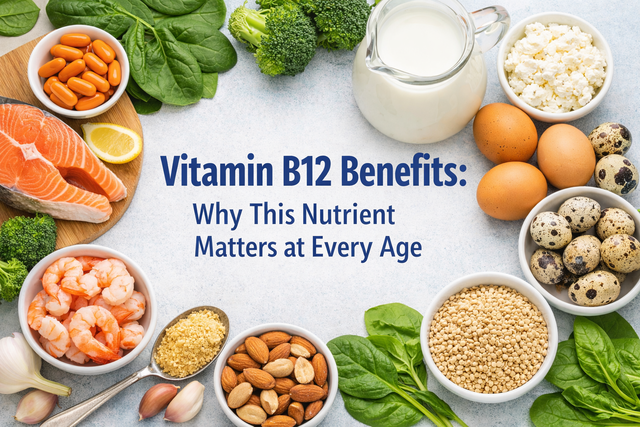
Vitamin B12 Benefits: Why This Nutrient Matters at Every Age
Vitamin B12, also known as cobalamin, stands out as one of those nutrients your body absolutely can’t do without, no matter your age. This water-soluble vitamin keeps your DNA in check, your nerves firing properly, and your red blood cells doing their job. But here’s where B12 gets tricky: unlike other vitamins that your body can whip up on its own or grab from various foods, B12 follows a more complicated path. Before your body can even use it, B12 must first bind with intrinsic factor, a special protein your stomach produces. Only then can your small intestine actually absorb it. This intricate absorption dance makes B12 deficiency surprisingly common, particularly among certain groups. When you understand just how many ways this nutrient supports your health, you’ll see why keeping your B12 levels up matters so much.
Table of Content
Cognitive Function and Neurological Health Across the Lifespan
Your brain and nervous system have a special relationship with vitamin B12 that lasts your entire life. Think of B12 as the maintenance crew for your myelin sheath, that protective coating around your nerve fibers that keeps signals zipping along efficiently. Without enough B12, that communication network starts to break down. Research consistently shows that when your B12 levels are solid, your memory stays sharper, your thinking clearer, and your overall mental performance stronger.
Energy Production and Metabolic Support
Ever wonder why B12 deficiency makes you feel so wiped out? It’s because this vitamin sits right at the heart of how your body creates energy. B12 participates in the metabolism of literally every cell in your body, with special emphasis on DNA synthesis and how you process fats. Working alongside other B vitamins, B12 helps convert your meals into glucose, the fuel your cells run on. That’s exactly why persistent fatigue and weakness are such telltale signs that your B12 might be running low, even when everything else seems fine.
Cardiovascular Health and Blood Cell Formation
Your heart and blood vessels rely on vitamin B12 throughout your entire life, making it absolutely fundamental for cardiovascular health. B12 teams up with folate and vitamin B6 to keep homocysteine levels in check, an amino acid that, when it climbs too high, is associated with increased heart disease risk. By managing homocysteine, B12 helps maintain healthy blood vessels and proper circulation. But the vitamin’s job doesn’t stop there.
Age-Specific Considerations for B12 Intake
About B12: what your body needs and how well it absorbs the vitamin changes dramatically throughout your life. Babies and young children need it for rapid growth and brain development, with breastfed infants depending entirely on mom’s B12 status. Teenagers going through growth spurts and hormonal shifts require adequate amounts to keep up with these intensive changes. Adults face a different set of challenges, dietary choices, stress, and certain medications can all interfere with absorption. If you’re vegetarian or vegan, you’re facing an uphill battle since B12 naturally occurs almost exclusively in animal products, making supplementation or fortified foods essential.
When addressing B12 deficiency, professionals who need to optimize methylation processes and neurological function often rely on a methyl B12 supplement from Seeking Health combined with methyl folate for enhanced bioavailability and metabolic support. Once you hit your fifties, deficiency risk jumps significantly because your stomach produces less acid, which impairs how B12 gets released from food and binds with intrinsic factor. Certain medical conditions, pernicious anemia, Crohn’s disease, celiac disease, can severely compromise absorption at any age. Knowing these age-specific factors and individual circumstances helps you stay ahead of potential deficiencies throughout your life.
Conclusion
Vitamin B12 truly earns its status as an essential nutrient, its impact on health and well-being spans every single stage of life. Whether it’s supporting a child’s developing nervous system, keeping an adult’s mind sharp, fueling daily activities with steady energy, or protecting the cardiovascular system, B12’s benefits are both remarkably diverse and absolutely critical. The absorption challenges that come with B12, combined with risk factors that change as you age, make awareness and proactive planning essential. You can maintain optimal B12 levels through smart dietary choices, fortified foods, or appropriate supplementation strategies, all valid approaches to meeting this fundamental nutritional need. When you understand how extensively this nutrient supports your health and take steps to keep your levels where they should be, you’re investing in your vitality, mental clarity, and physical well-being for the long haul. From childhood through your senior years, B12 remains one of those non-negotiable nutrients that deserves your attention.