
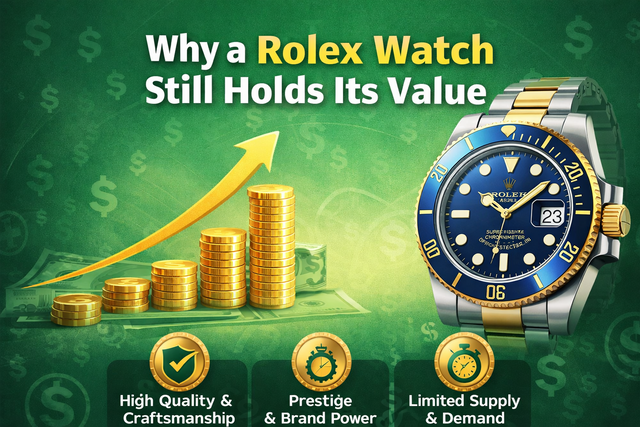
Reasons Why a Rolex Watch Still Holds Its Value
Rolex watches have long been recognized not only as luxury timepieces but also as enduring investments. Unlike many consumer goods that depreciate the moment they are purchased, Rolex watches often maintain or even increase in value over time. This phenomenon can be attributed to several key factors, ranging from meticulous craftsmanship to strategic scarcity. Understanding why a Rolex retains its value sheds light on both the brand’s enduring appeal and the broader world of luxury watch investing.
Table of Content
1. Unmatched Craftsmanship
One of the primary reasons a Rolex holds its value is the brand’s commitment to quality. Each Rolex watch undergoes rigorous testing and meticulous assembly, often involving hundreds of individual components. From the Oyster case, which ensures water resistance, to the precision of the in-house movement, every detail is engineered for longevity and reliability. This level of craftsmanship means that Rolex watches are not only durable but also highly sought after, even decades after they are produced. Collectors and buyers are willing to pay premium prices for watches that have stood the test of time, making Rolex a brand synonymous with both luxury and lasting value.
2. Brand Prestige and Heritage
Rolex is one of the most recognized luxury brands in the world. Founded in 1905, the brand has built a reputation for excellence, innovation, and timeless design. Owning a Rolex is more than possessing a watch—it is a symbol of success, status, and sophistication. For those looking to combine prestige with investment potential, many are eager to buy Rolex watch models because of their enduring appeal and recognized value. This prestige creates a strong secondary market because individuals are willing to pay top dollar for a piece of this heritage. Limited edition models or watches with historical significance can appreciate even further, demonstrating that the value of a Rolex extends beyond its materials to the story and status it represents.
3. Scarcity and Controlled Production
Unlike mass-produced watches, Rolex carefully controls the supply of its timepieces. Some models, such as the Rolex Daytona or the Submariner, are intentionally produced in limited quantities, creating scarcity. When demand outstrips supply, the value of these watches naturally rises. This controlled production strategy ensures that buyers who own certain Rolex models are unlikely to see them flooding the market, maintaining high resale prices. Scarcity, combined with strong brand demand, makes Rolex watches a reliable investment in the luxury watch market.
4. Consistent Design Language
Rolex watches maintain a consistent design language that balances tradition with modern innovation. Iconic models like the Datejust, Submariner, and Explorer have retained recognizable features over decades, making them instantly identifiable. This continuity ensures that even older models remain desirable because they carry the aesthetic and functional qualities that define Rolex. Collectors value these enduring designs, which contribute to the watch’s long-term resale value. Unlike trend-driven products that can quickly become outdated, Rolex designs have a timeless appeal that keeps them relevant and sought-after.
5. High-Quality Materials
Another factor in the lasting value of a Rolex watch is the use of premium materials. Rolex employs top-tier metals such as 904L stainless steel, 18k gold, and platinum, along with scratch-resistant sapphire crystal for the watch face. These materials not only enhance the aesthetic appeal but also ensure durability. Watches that resist wear and aging retain their value more effectively than those that show significant signs of deterioration. Additionally, certain materials like Everose gold or Rolesor (a combination of steel and gold) are exclusive to Rolex, further enhancing the desirability of these watches in the secondary market.
6. Strong Secondary Market
The Rolex secondary market is robust and dynamic, providing a platform for resale and investment. Watches often appreciate over time, particularly rare or discontinued models. For example, vintage Rolex models from the 1960s and 1970s can fetch prices exponentially higher than their original retail cost. This strong secondary market is supported by collectors, enthusiasts, and investors who recognize the long-term value of Rolex watches. Unlike many luxury items, which depreciate after purchase, Rolex has a track record of maintaining, and sometimes increasing, its monetary worth.
7. Brand Innovation and Reliability
While Rolex values tradition, it is also an innovator in horology. From the first waterproof Oyster case to the perpetual rotor self-winding mechanism, Rolex has consistently introduced innovations that enhance performance and reliability. This combination of cutting-edge engineering and proven design ensures that Rolex watches remain functional and reliable for decades. A timepiece that continues to perform well over the years is inherently more valuable, especially to collectors and second-hand buyers who prioritize both aesthetics and functionality.
8. Cultural Significance
Rolex watches have achieved cultural significance through associations with exploration, sports, and celebrity. They are worn by adventurers, athletes, and actors, appearing in films, on the red carpet, and in moments of historic achievement. These cultural associations enhance the perceived value of Rolex watches, making them more than just instruments for telling time—they are icons. A watch tied to cultural moments or notable individuals often commands a premium in the market, reinforcing Rolex’s reputation as a watch that retains and even appreciates in value.
9. Timeless Investment
In a world where trends come and go, Rolex watches offer a form of stability. While stocks and other assets may fluctuate dramatically, Rolex watches have shown remarkable consistency in retaining value. This predictability makes them attractive not only to collectors but also to investors seeking a tangible, enduring asset. Moreover, unlike electronic gadgets that become obsolete, a Rolex watch maintains its utility and allure over decades, providing both financial and emotional returns to its owner.
Conclusion
The enduring value of a Rolex watch is no accident. It is the result of meticulous craftsmanship, strategic scarcity, high-quality materials, and a brand reputation that combines prestige with reliability. Rolex watches are more than luxury accessories—they are investments that can appreciate over time while offering cultural significance and timeless appeal. Whether purchased as a status symbol, a collector’s item, or a financial asset, a Rolex continues to hold its value in a way few other products can match. For anyone considering a long-term investment in luxury, a Rolex watch represents not only elegance and precision but also enduring financial sense.