
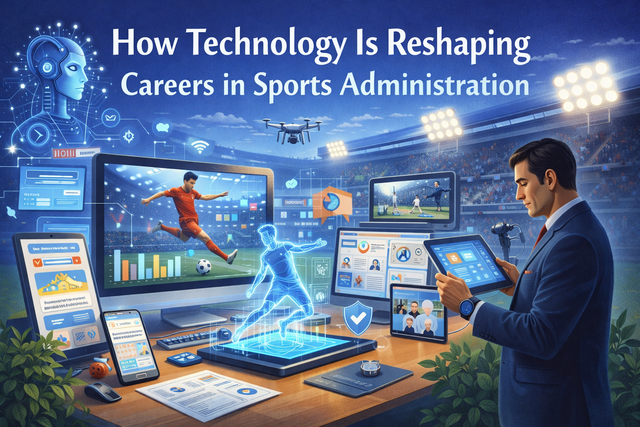
How Technology Is Reshaping Careers in Sports Administration
Key Takeaways
- Technology is creating innovative roles and transforming career opportunities in sports administration.
- Skills in data analytics, AI, and digital communication are essential for today’s sports professionals.
- Digital content expertise is crucial for effective fan engagement and team promotion.
- Remote and hybrid work setups are expanding job access and flexibility in the sports industry.
In today’s fast-paced sports industry, the influence of technology is transforming every aspect of the game, from how athletes are trained to the business operations that keep teams connected with fans and sponsors. With digital tools constantly evolving, aspiring professionals are pursuing an online sports administration master’s degree to prepare for these new opportunities and remain competitive in a rapidly advancing sector. The infusion of technology is not just revolutionizing athletic performance but also redefining career pathways for those passionate about sports management and administration.
The growing adoption of analytics, artificial intelligence, and digital platforms has created new, specialized positions in sports organizations worldwide. Whether managing social media engagement or making strategic decisions based on real-time statistics, modern sports administrators are required to balance traditional skills with technical adaptability. As teams and organizations shift their operations for the digital age, the careers within sports administration continue to diversify and evolve, providing a rich landscape for new talent.
Leading sports organizations worldwide are investing heavily in technological innovation—not only to gain a competitive edge on the field, but also to maximize efficiency, revenue, and audience impact. As this trend continues, a solid understanding of sports tech solutions is becoming just as critical as a passion for the industry itself. For those considering a career in sports administration, the time to embrace these changes is now.
According to a recent analysis by Forbes, industry-wide reliance on digital strategy is expected to accelerate in the coming years, dramatically influencing hiring, training, and leadership needs within sports organizations.
Table of Content
The Rise of Data Analytics in Sports Management
Data analytics sits at the heart of the modern sports revolution, shaping how teams evaluate talent, game plans, and operational goals. By leveraging statistical models and predictive algorithms, sports administrators can now uncover detailed insights into player efficiency, injury risks, and fan preferences. The result is smarter, faster decision-making at every level of the organization.
Today’s sports teams routinely employ entire analytics departments, with roles ranging from data scientists to performance analysts. These professionals harness diverse data sources—from biometric sensors to in-game video—translating raw numbers into winning strategies. The growth of these roles underscores the demand for expertise in both data tools and sports knowledge, cementing analytics as a cornerstone of the industry’s future.
Artificial Intelligence: A Game Changer
Artificial intelligence has moved well beyond hype and headlines—it’s now actively enabling coaches, general managers, and scouts to revolutionize their approaches. AI-powered platforms can analyze hours of video in moments, pinpointing play patterns and identifying training opportunities previously invisible to the naked eye. This powerful combination of data and AI-based modeling offers an unprecedented competitive advantage, and it requires skilled professionals to interpret and act on these automated insights.
AI’s influence isn’t limited to game-day tactics. It also optimizes business operations, from ticket pricing and crowd management to marketing campaign personalization. As organizations prioritize smarter resource allocation, the ability to work with AI-driven platforms becomes a vital skill set for anyone aiming to lead in sports administration.
Digital Media and Fan Engagement
In the age of social media and always-on connectivity, how teams interact with their fans has changed fundamentally. Every tweet, Instagram story, or video stream becomes an essential point of engagement, collecting valuable feedback and keeping supporters connected to their favorite teams. For sports administrators, mastering these channels means combining marketing know-how with digital storytelling—skills now indispensable in the field.
With digital engagement comes the power of real-time metrics, allowing for the tracking of which posts go viral and the measurement of sentiment across various platforms. This data informs personalized marketing and fan experiences, reinforcing the brand and enhancing loyalty. For professionals in this space, fluency with digital content tools is just as crucial as understanding the business of sport.
Remote Work Opportunities
The digital shift is also driving a major increase in remote work throughout the sports sector. Key functions, such as content creation, data analysis, and certain scouting roles, can be performed from anywhere, broadening the field for talent worldwide. This flexibility is attracting a more diverse pool of professionals, enabling organizations to tap into specialized expertise regardless of physical location.
Remote work isn’t merely a response to global events—it’s fast becoming a strategic advantage for forward-thinking sports entities. Virtual coordination and cloud-based systems enable smoother collaboration and increased efficiency. As more employers adopt flexible work models, the barriers to entering and advancing in sports administration continue to shrink, creating opportunities on a global scale.
Emerging Technologies in Sports Administration
Beyond data analytics and AI, other technological frontiers are rapidly gaining ground. Wearable devices now monitor athlete health and performance in real-time, aiding medical teams and trainers with instant feedback loops to prevent injuries and optimize outcomes. Similarly, immersive technologies such as virtual and augmented reality are creating new opportunities for both athlete training and fan entertainment.
Blockchain is emerging as an innovative solution for issues like content rights, fan tokens, and digital collectibles, introducing new business models and revenue streams for teams and leagues. These evolving tools are not only expanding the responsibilities of sports administrators but also redefining the required skill sets for success.
Preparing for a Tech-Driven Future
As the sports business becomes increasingly complex, aspiring administrators must proactively invest in education and upskill in areas such as analytics, AI, cybersecurity, and digital engagement. Modern graduate programs, especially those offered online, are designed to prepare students for this rapidly evolving landscape by providing practical, simulated experiences alongside academic theory.
According to ESPN, employers increasingly value candidates who combine subject-matter expertise with technical fluency, giving graduates of innovative sports administration programs a clear edge in the job market.
Conclusion
Technology is fundamentally reshaping what it means to build a career in sports administration. The professionals who succeed in this environment will be those who embrace new tools and trends, continually update their knowledge, and leverage technology as a foundation for creativity and leadership. For students and professionals alike, staying agile and future-focused is now the rule, not the exception, in this ever-evolving industry.