Building a Minimalist Jewelry Wardrobe You’ll Actually Wear
Most jewelry boxes are full of pieces that never see daylight. The statement earrings bought for one event, the chunky necklace that fights with every collar, the ring that pinches after an hour. A minimalist jewelry wardrobe fixes that problem by design. Instead of collecting more, the idea is to own a handful of quiet, versatile pieces that work with almost everything and get worn on repeat.
What Minimalist Jewelry Actually Means
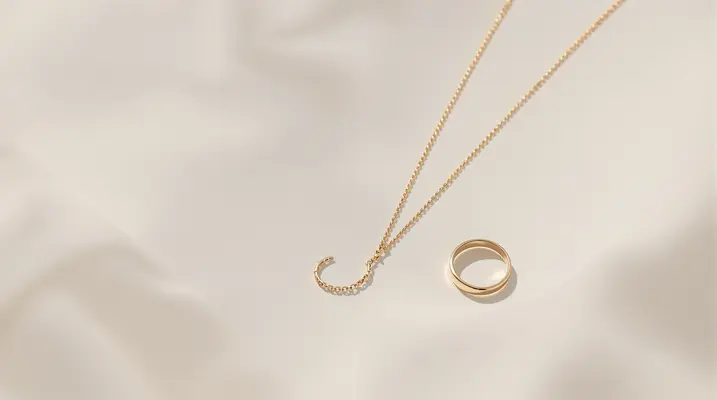
Minimalist jewelry is defined less by a specific look and more by restraint. Think clean lines, small scale, and finishes that flatter rather than compete. A thin chain instead of a bold pendant. A slim band instead of a cluster of stones. The pieces are meant to layer into an outfit rather than dominate it, which is exactly why they end up in daily rotation. When something is comfortable, easy to pair, and never overpowering, it stops being an accessory you plan around and becomes part of how you get dressed.
The Core Capsule Pieces
A functional capsule is smaller than most people expect. A few well-chosen basics cover nearly every occasion, from a workday to a dinner out. Start here:
- A dainty necklace. A fine chain, with or without a small pendant, sits close to the neckline and works under collars or on bare skin.
- Hoops or studs. Small to medium hoops read as effortless, while simple studs disappear into any look. Many people keep both and rotate.
- A slim ring. A thin band or a low-profile stone stacks easily and never gets in the way of typing, cooking, or handshakes.
- A thin bracelet. A delicate chain or a plain bangle finishes the wrist without weight or noise.
Four categories, and the wardrobe is essentially built. Everything after that is refinement.
Choosing Your Metals
Metal choice is where a capsule either holds together or falls apart. The simplest approach is to pick one primary tone, silver or gold, and let it anchor the collection. That way every piece pairs with every other piece by default. Skin tone can guide the decision, but comfort and personal preference matter more than any rule. Once the core tone is set, a single contrasting piece can be introduced later for mixing.
For pieces worn daily, material quality matters more than it does for occasional jewelry. This is a good place to look for everyday minimalist jewelry built on a 925 sterling silver base, often offered with 18K gold plating and designed to be hypoallergenic, so sensitive skin isn’t an afterthought.
Why Sterling Silver and 18K Gold Plating Suit Everyday Wear
Sterling silver gives a piece real substance and a lasting base, which is why it’s a common foundation for quality everyday jewelry. When that base is finished with 18K gold plating, it delivers a warm gold look without a fine-gold price tag, and the sterling underneath means the piece feels solid rather than flimsy. For a wardrobe meant to be worn constantly, that combination hits the sweet spot: a comfortable, skin-friendly base with a finish that looks polished from morning to night.
Mixing and Stacking, Subtly
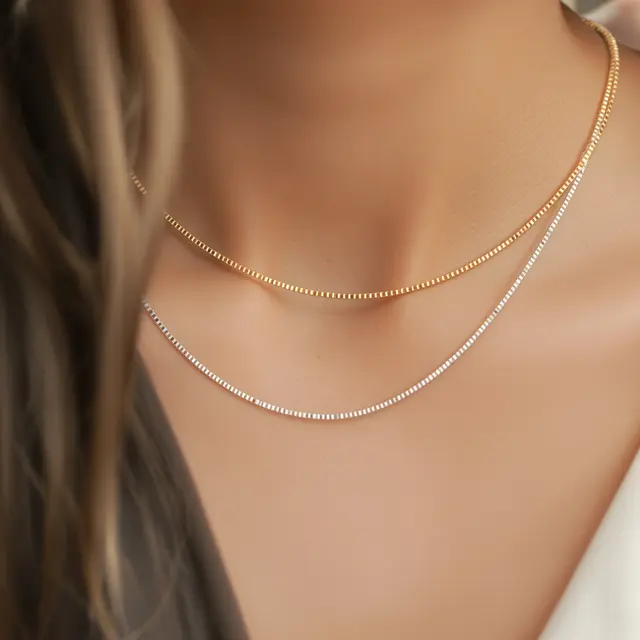
Minimalism doesn’t mean wearing one thing at a time. The trick is to layer within limits. Two thin necklaces at slightly different lengths create depth without tangling into a statement. Two or three slim rings across a couple of fingers read as considered rather than crowded. The guiding idea is contrast in scale, not volume, so each piece still has room to breathe. If a stack starts to feel loud, remove one item and it usually settles back into balance.
Caring for the Pieces
Everyday jewelry lasts longer with small habits. A few things help:
- Put jewelry on last, after lotion, perfume, and hairspray, and take it off first.
- Wipe pieces with a soft cloth after wear to lift oils and sweat.
- Store items separately so chains don’t tangle and finishes don’t scratch.
- Keep pieces dry when possible, since prolonged moisture is hard on any plated finish.
A minimalist jewelry wardrobe works because it removes friction. There are fewer decisions to make, fewer pieces to maintain, and nothing that only fits one outfit. Build it slowly, choose materials that hold up to daily life, and the result is a small collection that actually gets worn, which is the whole point.