
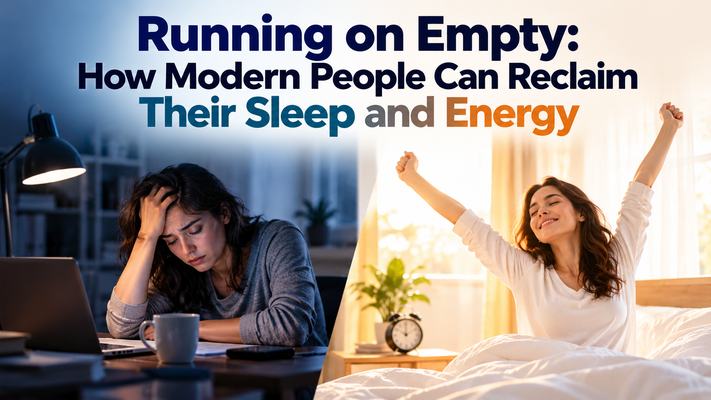
Running on Empty: How Modern People Can Reclaim Their Sleep and Energy
Most of us know the feeling. The alarm goes off, and before your feet touch the floor you are already calculating how many cups of coffee it will take to get through the day. By mid-afternoon your focus slips, by evening you are wired but exhausted, and when you finally lie down, sleep refuses to come. Then the cycle starts again.
Chronic tiredness has become so common that many people treat it as a normal part of adult life. It shouldn’t be. Fatigue affects mood, productivity, relationships, and long-term health. The good news is that most of what drains our energy comes from habits and environments we can change. Here is a practical look at where modern exhaustion comes from and what you can do about it.
Why We Are So Tired
Our bodies still run on an ancient biological clock, the circadian rhythm, which expects bright days and dark nights. Modern life rarely gives it either. We spend daylight hours indoors under dim artificial light, then flood our eyes with screens late into the evening. The brain receives mixed signals about when to be alert and when to rest.
Add to that long working hours, constant notifications, irregular meals, little physical movement, and a mental load that never quite switches off. None of these factors alone might seem dramatic, but together they wear down both the quality of sleep and the energy we have while awake.
Build a Rhythm Your Body Can Trust
The single most effective change for many people is a consistent sleep schedule. Going to bed and waking up at roughly the same time every day, weekends included, helps your internal clock stabilize. After a few weeks, falling asleep often becomes easier and waking up feels less brutal.
Aim for seven to nine hours, but focus first on consistency rather than perfection. Sleeping in until noon on Saturday may feel like recovery, yet it shifts your rhythm and makes Sunday night and Monday morning harder.
Use Light to Your Advantage
Light is the strongest signal your body clock receives. Try to get natural daylight within an hour of waking, even if it is just ten minutes on a balcony or a short walk to work. Morning light helps set your rhythm, boosts alertness, and makes it easier to feel sleepy at night.
In the evening, do the opposite. Dim the lights at home, switch to warmer lamps, and reduce screen use in the hour before bed. If cutting out your phone entirely feels unrealistic, start by keeping it out of the bedroom and using a regular alarm clock instead.
Create an Evening Wind-Down
The brain needs a transition between the pace of the day and the stillness of sleep. A short, repeatable routine signals that it is time to slow down. This can be as simple as a warm shower, light stretching, reading a paper book, or writing down tomorrow’s tasks so they stop circling in your head.
Keep the bedroom cool, dark, and quiet. A room temperature of around 18 °C works well for most people. Blackout curtains, earplugs, or a white noise machine can make a surprising difference, especially in busy urban areas.
Rethink Caffeine, Alcohol, and Food
Coffee is not the enemy, but timing matters. Caffeine can stay in your system for six hours or more, so an afternoon espresso may still be affecting you at midnight. Try setting a personal cut-off point, such as 2 p.m., and see how your sleep responds.
Alcohol is trickier than it seems. It may help you fall asleep faster, but it fragments sleep later in the night and leaves you less rested. Heavy meals close to bedtime can have a similar effect.
During the day, steady energy depends on steady fuel. Meals built around protein, fiber, healthy fats, and complex carbohydrates prevent the sharp spikes and crashes that come from sugary snacks and refined foods. Drinking enough water also matters, since even mild dehydration can feel like fatigue.
Move More, Even a Little
It sounds counterintuitive, but spending energy through exercise tends to create more of it. Regular physical activity improves sleep depth, lifts mood, and increases daytime alertness. You don’t need a demanding gym routine. Brisk walks, cycling, swimming, yoga, or taking the stairs all count.
If you sit for most of the day, short movement breaks every hour can help clear mental fog. Just try to finish intense workouts a few hours before bedtime, as they can leave you too stimulated to fall asleep.
Manage Stress and Mental Load
Many sleepless nights have little to do with the body and everything to do with the mind. Racing thoughts, unfinished tasks, and background worry keep the nervous system on alert. Techniques like slow breathing, meditation, journaling, or a brief “worry window” earlier in the evening can lower that tension.
Setting boundaries with work also plays a role. Answering emails at 11 p.m. tells your brain the day is not over. Where possible, define a clear end to your working hours and protect it.
Rest Is More Than Sleep
Energy is not only restored at night. Short pauses during the day, time outdoors, social connection, and activities that bring joy all help refill your reserves. A 15–20 minute nap in the early afternoon can boost focus without interfering with nighttime sleep. Longer naps, however, may leave you groggy and make bedtime harder.
Supplements and Medication: Helpful, but Not a Shortcut
For some people, lifestyle changes alone are not enough, and that is where supplements and medication can play a role. Melatonin, magnesium, and herbal options such as valerian root or chamomile are popular for supporting sleep, and sometimes people decide to buy Armodafinil online after the consultation with their doctor. Vitamin D, B vitamins, and iron can help with low energy when a deficiency is part of the problem. In cases of chronic insomnia, doctors may also prescribe sleep medication for short-term use. These options work best alongside healthy habits rather than as a replacement for them, and it is always wise to check with a doctor or pharmacist before starting anything new, especially if you already take other medication.
Know When to Seek Help
If you consistently sleep enough but still feel exhausted, or if you snore loudly, wake up gasping, or struggle with insomnia for weeks at a time, talk to a doctor. Conditions such as sleep apnea, thyroid problems, iron deficiency, or depression can all show up as persistent fatigue, and they deserve proper attention.
Conclusion
Lack of sleep and energy is one of the most widespread complaints of modern life, but it is rarely a mystery without a solution. Small, consistent changes, such as a regular schedule, more daylight, fewer late screens, smarter caffeine habits, regular movement, and better stress management, can add up to a noticeable shift within a few weeks.
You don’t have to overhaul everything at once. Pick one or two changes, stick with them, and build from there. Your body is designed to rest and recover. Often it simply needs the right conditions to do its job.