
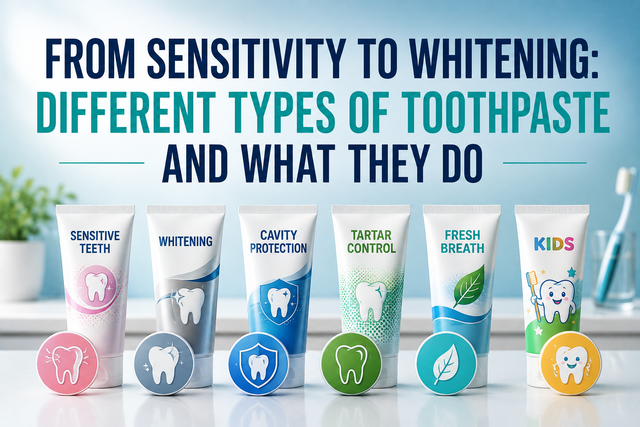
From Sensitivity to Whitening: Different Types of Toothpaste and What They Do
Picking a toothpaste seems simple, yet there are many kinds made for different needs. Some are made to help stop cavities. Others are made for sore spots, like tooth sensitivity. There are also options for stains and a few other goals. If you know what types exist, it is easier to decide what fits your routine. Here are five types you can think about trying:
Fluoride Toothpaste for Cavity Protection
Fluoride toothpaste is a go-to option for daily brushing. It can help strengthen tooth enamel. Stronger enamel is more ready for the acids that germs in the mouth produce. With regular brushing and the usual basic care, cavities are less likely. Many adults use fluoride paste as a normal choice. For kids, only a little paste should be used, not a thick layer. For a lot of people, a fluoride paste is a simple first step.
Toothpaste for Sensitive Teeth
Tooth sensitivity makes eating a normal meal difficult. Consumption of cold items and hot beverages causes a sharp feeling in the mouth. There are some types of toothpaste that have been manufactured especially for those people who have sensitive teeth. These kinds of toothpaste help because they relieve the nerve part in the tooth. Toothpaste also assists in sealing any opening that allows sensitivity to occur. If sensitivity continues even after some time, then visiting the dentist is advisable. Persistent sensitivity could be caused by cavities and gum problems.
Brightening Toothpaste for a Cleaner Smile
Brightening-style toothpastes are made to deal with surface staining. These marks can come from coffee, tea, soda, or tobacco. Many formulas use mild polishing bits that help loosen the color while you brush. That is why teeth can look a bit cleaner over time. Those hoping to improve their smile can buy the best whitening toothpaste that suits their needs. Nevertheless, it is vital to state that toothpaste will most probably not alter the color of your teeth in a significant way. Those with very stained teeth are advised to visit the dentist and have their teeth whitened. Adhering to the instructions on the tube of toothpaste ensures that you brush adequately.
Gum-Care Toothpaste for Healthier Gums
Gum care toothpaste is recommended for those who need extra protection against plaque formation and irritation of the gums. The formation of plaque in the area of the gums may lead to inflammation, bleeding, and other problems of periodontal health. There are some toothpaste types that include antibacterial or tartar control components, which are useful to have a clean mouth in addition to good brushing. Still, toothpaste does not fix serious gum problems. If your gums are affected, you need regular dental visits. Daily flossing and careful brushing matter a lot too. If you notice bleeding, swelling, or pain that does not settle, you should get advice from a dental professional right away. Changing toothpaste alone will not solve that issue
Tartar-Control Toothpaste for Plaque Management
There are also toothpastes for tartar control. Many people use these when they form hard buildup in the mouth. Tartar forms when plaque hardens. This happens as minerals settle in the plaque. Some stains can turn into a firmer layer. That layer is called tartar. Tartar control toothpaste is designed to slow how that buildup forms. You must keep up with your usual mouth care routine. When tartar has already formed, it often has to be removed by a dentist or dental hygienist, using the right tools.
In conclusion, the selection of the right toothpaste mainly comes down to personal oral health needs. There are fluoride pastes that will protect from cavities on a daily basis, sensitive pastes to relieve pain, whitening pastes to remove stains from teeth, gum pastes to maintain healthy gums, and pastes that control the formation of tartar. If you have no idea what paste to select, ask a dentist.