What Is a Window Treatment? 7 Popular Types for Your Home
Windows play an important role in the appearance, comfort, and functionality of a home. They allow natural light to enter, provide outdoor views, and connect indoor spaces with the surrounding environment. However, uncovered windows can create privacy problems, increase glare, and allow unwanted heat to enter or escape. This is where window treatments become useful.
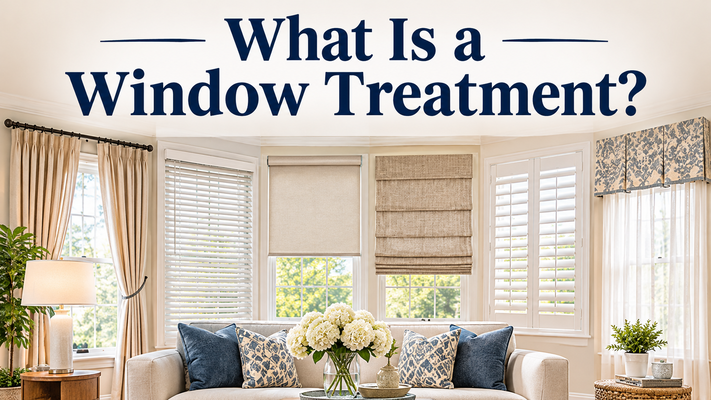
What is a window treatment? A window treatment is a decorative or functional covering that homeowners install on, around, or above a window. It helps control natural light, improve privacy, regulate indoor temperatures, reduce glare, and enhance interior design. Curtains, blinds, roller shades, Roman shades, shutters, and valances are some common examples.
Window treatments serve more than one purpose. Some homeowners choose them to create a comfortable sleeping environment, while others want to protect furniture from sunlight or give their living rooms a more sophisticated appearance. The right selection can also improve energy efficiency and make everyday living more comfortable.
Today, homeowners can choose from many window covering styles, materials, colours, operating systems, and designs. Traditional curtains remain popular, while modern roller shades, cellular shades, and motorized blinds offer practical solutions for contemporary homes.
In this guide, we explore seven popular types of window treatments, explain how they work, compare their features, and discuss how to choose suitable options for different rooms.
What Is a Window Treatment?
A window treatment refers to any product, covering, or decorative feature that enhances the appearance and functionality of a window. It can cover the entire window or only a specific section, depending on the homeowner’s requirements.
Window treatments generally serve two purposes: practical and decorative. Practical treatments help manage sunlight, privacy, glare, and indoor comfort. Decorative treatments add colour, texture, patterns, and visual interest to a room.
For example, a homeowner might install blackout curtains in a bedroom to create a darker sleeping environment. Someone working from home might prefer adjustable Venetian blinds to control sunlight without completely blocking the outdoor view. A living room might feature sheer curtains combined with heavier drapes to create an elegant layered appearance.
Window treatments include several product categories:
- Curtains and drapes: Fabric panels that hang from rods or tracks.
- Blinds: Window coverings with adjustable horizontal or vertical slats.
- Shades: Continuous fabric or material panels that roll, fold, or stack.
- Shutters: Structured window coverings with fixed frames and adjustable louvers.
- Valances and cornices: Decorative features that cover the upper portion of a window.
Although people often use the terms window coverings and window treatments interchangeably, window treatments can also include decorative elements, hardware, and layered arrangements.
Why Are Window Treatments Important for Your Home?
Selecting appropriate window treatments can improve how a room looks and feels. They also help solve everyday problems associated with uncovered windows.
Here are eight important benefits.
1. Better Privacy and Security
Windows provide natural views, but they can also expose indoor activities to neighbours and people passing outside. Curtains, blinds, and shutters create a barrier between indoor spaces and the outside environment.
For bedrooms and bathrooms, privacy should remain a priority. Blackout curtains, cellular shades, and plantation shutters can help prevent unwanted views.
For ground-floor living rooms, adjustable blinds or layered curtains provide flexibility. You can enjoy daylight during the afternoon and close the coverings when privacy becomes necessary.
2. Natural Light Control
Natural sunlight makes indoor spaces feel welcoming. However, direct sunlight can become uncomfortable, particularly during summer afternoons.
Window treatments allow homeowners to control how much sunlight enters a room.
Sheer curtains soften bright daylight, while blackout shades create darker conditions. Venetian blinds offer another advantage because you can adjust their slats to redirect sunlight without raising the entire covering.
3. Improved Indoor Temperature Regulation
Windows can contribute to unwanted heat gain during summer and heat loss during colder months. Appropriate coverings create an additional layer between the indoor environment and window glass.
Cellular shades use air pockets to reduce heat transfer. Insulated curtains and properly fitted blinds can also improve comfort.
However, performance depends on fabric, installation, window construction, and climate. A window covering cannot replace properly insulated glazing or repair gaps around a window frame.
4. Better Energy Efficiency
Energy-efficient window treatments help manage unwanted solar heat and reduce temperature fluctuations.
For example, closing suitable shades during hot afternoons can reduce direct solar heat entering a room. During cooler periods, opening the coverings to capture sunlight and closing them after sunset can help maintain indoor warmth.
The U.S. Department of Energy also identifies interior blinds and shades as useful options for reducing unwanted solar heat gain.
5. Protection Against UV Rays
Direct sunlight can gradually damage furniture, flooring, artwork, carpets, and decorative fabrics.
Solar shades, lined curtains, and other UV-resistant window coverings help reduce exposure to sunlight. Some fabrics offer specific UV-blocking properties, so check the manufacturer’s specifications before purchasing.
This benefit makes window treatments particularly useful in living rooms with large windows or spaces that receive strong afternoon sunlight.
6. Improved Interior Appearance
Window coverings contribute to the overall interior design of a room.
A neutral roller shade can complement a minimalist interior, while patterned Roman shades can introduce colour and texture. Floor-length curtains can make a room feel taller and create a more luxurious appearance.
The right combination of colours, fabrics, and textures can connect window designs with furniture, flooring, wall colours, and other decorative elements.
7. Reduced Glare
Bright sunlight can create reflections on television screens, laptop displays, and other glossy surfaces.
Solar shades and adjustable blinds help control glare while maintaining a comfortable amount of daylight.
This feature proves especially useful in home offices, entertainment rooms, and living rooms with large glass windows.
8. Greater Everyday Comfort
Window treatments make it easier to adjust the indoor environment throughout the day.
You can close bedroom curtains at night, lower kitchen shades during intense sunlight, or adjust office blinds when working on a computer.
Motorized systems make these adjustments even easier, particularly for large windows and hard-to-reach installations.
Hard vs. Soft Window Treatments: What Is the Difference?
Window treatments generally fall into two main categories: hard and soft. Understanding this distinction helps homeowners select products that suit their interior design and maintenance requirements.
Hard Window Treatments
Hard window treatments use structured materials such as wood, aluminium, PVC, vinyl, and composite materials.
They generally maintain their shape and offer practical light-control features.
Common examples include:
- Venetian blinds.
- Vertical blinds.
- Plantation shutters.
- Aluminium blinds.
- Faux wood blinds.
Hard treatments work particularly well in contemporary interiors, kitchens, bathrooms, and home offices. Many options require only occasional dusting or wiping.
Soft Window Treatments
Soft window treatments use fabric and other flexible materials. They introduce warmth, texture, and colour into interior spaces.
Examples include:
- Roman shades.
- Sheer panels.
- Fabric valances.
Soft treatments suit living rooms, bedrooms, dining rooms, and formal spaces. Homeowners can choose from cotton, linen, polyester, velvet, silk, and blended fabrics.
Main Differences
| Feature | Hard treatments | Soft treatments |
| Materials | Wood, metal, PVC, composite | Cotton, linen, polyester, velvet |
| Appearance | Structured and defined | Soft and decorative |
| Light control | Adjustable with slats or panels | Depends on fabric and lining |
| Maintenance | Usually wiping or dusting | May require washing or dry cleaning |
| Common examples | Blinds and shutters | Curtains and Roman shades |
| Best applications | Kitchens, bathrooms, offices | Living rooms, bedrooms, dining areas |
Some window treatments combine both categories. For instance, homeowners can install wooden blinds behind fabric curtains to achieve adjustable light control and a softer appearance.
7 Popular Types of Window Treatments for Your Home
Choosing between different window treatments becomes easier when you understand how each product operates, what materials it uses, and where it performs best.
The following seven options cover popular styles for traditional, contemporary, and modern homes.
1. Curtains and Drapes
Curtains and drapes are among the most familiar window treatments. They use fabric panels that hang from curtain rods, tracks, or ceiling-mounted systems.
Homeowners can open them to allow daylight and outdoor views or close them to improve privacy and reduce sunlight.
Although people often use curtains and drapes as interchangeable terms, they traditionally describe slightly different products.
What Is the Difference Between Curtains and Drapes?
Curtains generally use lighter fabrics and offer a relaxed appearance. They come in different lengths, colours, patterns, and levels of transparency.
Drapes usually feature heavier fabrics, additional lining, and a more formal appearance. Some designs include blackout or thermal lining for better light control and insulation.
| Feature | Curtains | Drapes |
| Fabric | Usually lightweight | Usually heavier |
| Appearance | Casual or decorative | Formal or luxurious |
| Light control | Sheer to room-darkening | Often stronger with lining |
| Common materials | Cotton, voile, linen | Velvet, lined polyester, heavier blends |
| Best applications | Living rooms, kitchens, bedrooms | Bedrooms, formal living rooms |
Popular Curtain and Drape Materials
Different fabrics create different visual effects and functional benefits.
- Cotton: A versatile fabric that suits casual and traditional interiors.
- Linen: Creates a natural appearance and allows a relaxed flow of light, depending on its weave.
- Velvet: Adds richness and weight to formal interiors.
- Polyester: Offers a practical, widely available option with different textures and colours.
- Sheer fabric: Filters daylight while maintaining a bright atmosphere.
How Do Curtains and Drapes Work?
Most curtains hang from rods or tracks. Rings, hooks, eyelets, or fabric tabs connect the panels to the supporting hardware.
Homeowners can pull the panels manually or use motorized curtain tracks. Double-track systems allow two fabric layers, such as sheer curtains and heavier blackout drapes.
For example, a bedroom might use white sheer curtains during the day and dark blackout drapes at night.
Advantages and Limitations
Advantages:
- Available in many colours, patterns, and materials.
- Add warmth and visual softness.
- Offer flexible privacy and light-control options.
- Work well with blinds and shades.
- Easy to update when interior styles change.
Limitations:
- Some fabrics collect dust and require regular cleaning.
- Heavy panels need strong rods and suitable supports.
- Long curtains can obstruct furniture or radiators.
- Lightweight curtains may offer limited nighttime privacy.
Best rooms: Living rooms, bedrooms, dining rooms, and large windows.
Practical example: For a living room with large windows, floor-length linen curtains can create an elegant appearance while allowing natural light to enter.
2. Window Blinds
Window blinds feature individual slats or vanes that homeowners can tilt, raise, lower, or move sideways. They provide adjustable light control and suit interiors that need a structured appearance.
Unlike curtains, which use continuous fabric panels, traditional blinds allow users to control light by changing the angle of their slats.
How Do Window Blinds Work?
Horizontal blinds use a lifting mechanism and a tilt mechanism. The lifting system raises or lowers the slats, while the tilt mechanism changes their angle.
Vertical blinds operate differently. Their vanes rotate to adjust sunlight and move sideways along a track when homeowners want to uncover the window.
Modern blinds may use cordless controls, wands, remote controls, or motorized systems.
Popular Types of Window Blinds
Venetian blinds
Venetian blinds feature horizontal slats connected by cords or ladder tapes. They come in wood, faux wood, aluminium, and other materials.
They work well in offices, bedrooms, kitchens, and living rooms.
Vertical blinds
Vertical blinds use long vertical vanes that rotate and slide along a track. Their design makes them suitable for sliding glass doors and wide windows.
Horizontal blinds
Horizontal blinds describe blinds with slats that run across the width of the window. Venetian blinds represent a common example of this arrangement.
Mini blinds
Mini blinds use narrower horizontal slats. Aluminium versions often suit compact windows and practical spaces.
Common Materials
- Wood: Provides a natural and warm appearance.
- Faux wood: Offers a wood-like finish with materials designed for greater moisture resistance, depending on the product.
- Aluminium: Lightweight and suitable for modern or office interiors.
- PVC: Provides an affordable option for different window sizes.
Advantages and Limitations
Advantages:
- Allow precise adjustment of incoming light.
- Provide practical privacy control.
- Come in different materials and finishes.
- Suit many window shapes and sizes.
- Offer a neat, organised appearance.
Limitations:
- Individual slats can collect dust.
- Some materials may warp or deteriorate under unsuitable conditions.
- Slats may allow small amounts of light through when closed.
- Wide blinds require suitable support and careful installation.
Best rooms: Home offices, kitchens, bedrooms, and bathrooms with moisture-suitable materials.
Practical example: Aluminium Venetian blinds work well in a home office because you can tilt the slats to reduce screen glare while maintaining some daylight.
3. Roller Shades
Roller shades use a single piece of fabric that wraps around a cylindrical tube installed above the window. Their simple construction creates a clean appearance without the visible slats found in traditional blinds.
They have become a popular option for modern window treatments because they offer different levels of light control without adding visual complexity.
How Do Roller Shades Work?
A roller shade uses a tube, fabric panel, mounting brackets, and an operating mechanism.
When you lower the shade, the fabric unrolls and covers the window. When you raise it, the fabric wraps around the tube.
Depending on the design, homeowners can operate roller shades using:
- A manual chain mechanism.
- A spring-assisted mechanism.
- A cordless lifting system.
- A motorized control system.
Different Fabric and Opacity Options
Roller shades come in several fabric types.
Light-filtering roller shades: These fabrics soften incoming sunlight while maintaining a bright indoor environment.
Room-darkening roller shades: These reduce the amount of light entering the room and improve privacy.
Blackout roller shades: These use opaque materials to block light through the fabric itself. However, small gaps around the edges can still allow light into the room.
Solar roller shades: These use specially designed fabrics to reduce glare and solar exposure while preserving some outdoor visibility. Their nighttime privacy depends on fabric openness and indoor lighting.
Advantages and Limitations
Advantages:
- Simple and minimalist appearance.
- Available in different colours and opacity levels.
- Easy to operate.
- Suitable for motorization.
- Work well with layered window coverings.
Limitations:
- Some installations leave light gaps around the edges.
- Fabric can collect dust and may require careful cleaning.
- Basic roller shades provide less decorative texture than fabric curtains.
- Fabric quality influences durability and performance.
Best rooms: Bedrooms, living rooms, home offices, and modern apartments.
Practical example: A light-filtering roller shade works well in a living room that receives strong afternoon sunlight. It reduces harsh brightness without making the entire space dark.
4. Roman Shades
Roman shades combine the appearance of fabric curtains with the practical operation of a window shade. They use a fabric panel that folds into horizontal sections as the homeowner raises it.
When lowered, the fabric covers the window and creates a relatively smooth surface. When raised, the material forms decorative folds.
How Do Roman Shades Work?
Roman shades typically use fabric, horizontal support rods or battens, lift cords or an alternative lifting mechanism, and mounting hardware.
As you raise the shade, the lifting mechanism gathers the fabric into evenly arranged folds. Lowering it allows the material to unfold across the window.
Some modern products use cordless or motorized operating systems.
Popular Roman Shade Styles
Flat Roman shades: These maintain a relatively smooth appearance when lowered. They suit contemporary interiors and patterned fabrics.
Classic or soft-fold Roman shades: These create gentle folds that add texture and a decorative appearance.
Hobbled Roman shades: These retain overlapping fabric folds even when lowered, creating a more traditional look.
Relaxed Roman shades: These feature a gentle curve along the bottom edge rather than maintaining a perfectly straight line.
Fabric and Design Options
Roman shades work with cotton, linen, polyester blends, textured fabrics, and decorative patterns.
Homeowners can also select lining options to improve privacy, reduce sunlight, or achieve room-darkening performance.
Advantages and Limitations
Advantages:
- Combine fabric elegance with practical shade operation.
- Offer many design and colour options.
- Suit traditional and modern interiors.
- Work well with custom window designs.
- Can create a sophisticated appearance in smaller spaces.
Limitations:
- The folded fabric stack occupies some window space when raised.
- Some fabrics require professional cleaning.
- Heavy materials need suitable lifting hardware.
- They may not suit areas with frequent moisture unless the fabric is appropriate.
Best rooms: Living rooms, bedrooms, dining rooms, and decorative study spaces.
Practical example: A patterned Roman shade can become a decorative focal point in a dining room, especially when its fabric coordinates with the room’s upholstery.
5. Cellular or Honeycomb Shades
Cellular shades, also known as honeycomb shades, are designed to improve indoor comfort through their unique folded construction.
They contain connected fabric cells that resemble a honeycomb when viewed from the side. These cells trap pockets of air and create an insulating layer near the window.
This construction makes cellular shades particularly interesting for homeowners who prioritise temperature regulation and energy efficiency.
How Does the Honeycomb Structure Work?
Cellular shades use pleated fabric arranged into one or more layers of connected air pockets.
When the homeowner lowers the shade, these cells expand and create an insulating barrier between the room and the window.
When raised, the material compresses into a compact stack.
The product may include single-cell, double-cell, or other cellular configurations. More layers can provide additional insulating potential, although actual performance depends on the product’s design, installation, and window construction.
Light and Privacy Options
Cellular shades offer different opacity levels.
- Light-filtering options soften daylight.
- Room-darkening options reduce incoming sunlight.
- Blackout options use opaque fabrics to block light through the shade material.
Some designs also offer top-down/bottom-up operation. This feature allows homeowners to lower the top portion while keeping the bottom covered, helping balance daylight and privacy.
Advantages and Limitations
Advantages:
- Honeycomb construction traps air.
- Can improve thermal comfort.
- Available in different opacity levels.
- Offer a neat and compact appearance.
- Suit many modern interior designs.
Limitations:
- Dust can collect inside the cellular structure.
- Some designs require specialised cleaning.
- They may cost more than basic blinds.
- Fabric cells can become damaged if handled incorrectly.
The U.S. Department of Energy identifies well-fitted cellular shades as an energy-saving window attachment and discusses their potential to improve household HVAC performance. Actual savings vary by home and installation.
Best rooms: Bedrooms, living rooms, and spaces that experience significant temperature changes.
Practical example: Double-cell shades can provide an additional insulating layer in a bedroom with windows that receive strong seasonal temperature exposure.
6. Window Shutters
Window shutters are structured coverings that attach to a window frame or surrounding opening. They feature solid panels with adjustable louvers or fixed sections.
Unlike curtains and many shades, shutters create a permanent architectural element in the room.
They are popular in traditional, transitional, farmhouse, and contemporary interiors.
What Are Plantation Shutters?
Plantation shutters are a popular shutter style with wider adjustable horizontal louvers.
Homeowners can tilt the louvers to control sunlight and airflow when the window is open. Some designs also feature hinged panels that swing open, allowing access to the entire window.
Traditional shutters may feature narrower louvers, solid panels, or different decorative profiles.
Popular Shutter Materials
Wood shutters: Provide a natural appearance and suit traditional or premium interiors.
Composite shutters: Combine different materials to create a durable structured covering.
PVC or vinyl shutters: Often suit moisture-prone spaces when the manufacturer specifies them for that application.
Faux wood shutters: Reproduce the appearance of natural wood with alternative materials.
How Do Window Shutters Work?
Shutters generally use a frame, hinged panels, and adjustable louvers.
You can tilt the louvers to redirect sunlight or open the panels to uncover the window. Some installations allow independent adjustment of upper and lower sections.
Advantages and Limitations
Advantages:
- Create an architectural appearance.
- Offer adjustable light control.
- Provide strong privacy when properly closed.
- Durable materials can offer long-term performance.
- Available in traditional and modern designs.
Limitations:
- Usually require a higher initial investment.
- Need careful measurements and installation.
- Hinged panels require enough clearance to open.
- Some materials are unsuitable for prolonged moisture exposure.
Best rooms: Living rooms, bedrooms, bathrooms with suitable materials, and homes with traditional or classic architectural features.
Practical example: White plantation shutters can complement a traditional living room while allowing homeowners to adjust the amount of daylight entering the space.
7. Valances and Cornices
Valances and cornices are decorative window treatments that cover the upper portion of a window. They add a finished appearance and can hide curtain tracks, rods, and other mounting hardware.
Unlike blinds and shades, they do not usually provide meaningful light control or complete privacy on their own.
Their primary purpose is to enhance window aesthetics and complement other coverings.
What Are Valances?
A valance is generally a short fabric treatment that hangs across the top of a window.
It may feature pleats, folds, gathers, patterns, or decorative edges. Some valances have a simple straight design, while others include curved or layered fabric.
Common styles include:
- Straight valances.
- Pleated valances.
- Scalloped valances.
- Gathered fabric valances.
- Swag valances.
What Are Cornices?
A cornice is a structured horizontal covering that sits above the window. Manufacturers commonly construct cornices from wood, MDF, or other rigid materials.
Some designs feature padding and decorative fabric upholstery. Others use painted or finished surfaces to coordinate with furniture and architectural details.
Valances vs. Cornices
| Feature | Valances | Cornices |
| Construction | Usually fabric | Usually rigid material |
| Appearance | Soft and decorative | Structured and defined |
| Weight | Generally lightweight | Usually heavier |
| Main purpose | Decorative finishing | Hiding hardware and adding structure |
| Common styles | Gathered, pleated, scalloped | Boxed, upholstered, wooden |
Advantages and Limitations
Advantages:
- Improve the appearance of window coverings.
- Hide curtain tracks and mounting hardware.
- Add colour and decorative detail.
- Work with curtains, blinds, and shades.
- Suit traditional and formal interiors.
Limitations:
- Do not provide privacy on their own.
- Do not offer meaningful light control.
- Some designs can make small windows appear crowded.
- Rigid cornices need secure mounting.
Best rooms: Living rooms, dining rooms, formal bedrooms, and decorative spaces.
Practical example: A fabric valance above white roller shades can soften the window’s appearance without sacrificing the practical benefits of the shade.
How to Choose the Right Window Treatment for Your Home
Selecting the right window treatment requires more than choosing an attractive fabric or colour. You should consider how you use each room, how much sunlight enters, the level of privacy you need, and how much time you want to spend on maintenance.
The following factors can help you make a practical decision.
1. Consider Room Size and Window Dimensions
Start by measuring the width and height of your windows. Incorrect measurements can create gaps, uneven coverage, or installation problems.
For smaller rooms, compact roller shades and blinds can create a clean appearance without taking up much space.
For larger rooms, floor-length curtains, wide Roman shades, or custom shutters can create a more balanced design.
Also consider how the window opens. Casement windows, sliding doors, bay windows, and unusually shaped windows may require different mounting arrangements.
2. Match the Interior Design
Your window coverings should complement the existing furniture, wall colours, flooring, and decorative elements.
For example, natural linen curtains work well with neutral interiors, while wooden blinds complement furniture with natural finishes.
Consider these combinations:
- Minimalist interiors: Roller shades and simple blinds.
- Traditional interiors: Drapes, Roman shades, and wooden shutters.
- Contemporary interiors: Motorized shades and layered curtains.
- Rustic interiors: Linen curtains and woven natural materials.
- Luxury interiors: Velvet drapes and custom Roman shades.
3. Identify Your Privacy Requirements
Privacy requirements differ from room to room.
Bedrooms and bathrooms usually need greater privacy than living rooms or dining spaces. For these areas, consider blackout curtains, opaque shades, or adjustable shutters.
If you want daytime privacy without completely blocking natural light, choose suitable light-filtering fabrics. Remember that sheer materials may not provide nighttime privacy when indoor lights are on.
4. Decide How Much Natural Light You Want
Think about how sunlight affects your daily activities.
A living room may benefit from filtered daylight, while a bedroom may require room-darkening coverage.
Home offices often need glare reduction to make computer screens easier to view.
Choose the fabric opacity and operating mechanism according to the room’s purpose.
5. Select Suitable Materials and Fabrics
Material selection influences appearance, durability, cleaning requirements, and performance.
Cotton and linen create a natural fabric appearance. Polyester offers a practical option for many everyday applications. Aluminium and faux wood suit structured blind designs, while composite materials can work well in selected moisture-prone areas.
For kitchens and bathrooms, prioritise materials that can handle the room’s moisture and cleaning requirements.
6. Check Cleaning and Maintenance Requirements
Some window treatments need more attention than others.
Blinds require periodic dust removal, while curtains may need machine washing or professional cleaning depending on the fabric.
Cellular shades need careful cleaning because dust can collect within their honeycomb structure.
Before purchasing, check the manufacturer’s cleaning instructions. This is particularly important for expensive fabrics and custom window treatments.
7. Set a Realistic Budget
Your budget should include more than the product price.
Consider:
- Fabric or material costs.
- Mounting brackets and hardware.
- Custom measurements.
- Installation charges.
- Motorized controls.
- Maintenance and replacement costs.
Standard-size roller shades and aluminium blinds may offer economical solutions. Custom shutters, premium drapes, and motorized systems generally require a larger investment.
Compare the total installed cost rather than choosing a product based only on its initial price.
8. Consider Installation and Operating Requirements
Some window treatments are straightforward to install, while others require professional measurement and mounting.
For example, lightweight roller shades may suit a basic DIY installation. Large shutters and ceiling-mounted curtain tracks may require professional assistance.
Also consider whether you prefer manual, cordless, or motorized operation.
If young children live in the home, prioritise cordless coverings or products with inaccessible operating cords. The U.S. Consumer Product Safety Commission identifies cordless window coverings as the safest option around young children.
Best Window Treatments for Different Rooms
Different rooms have different lighting, privacy, and maintenance requirements. Choosing window coverings according to room function creates a more comfortable and practical home.
Living Room
The living room often serves as the main gathering space, so appearance and light control both matter.
Recommended options:
- Floor-length curtains.
- Roman shades.
- Roller shades.
- Wooden blinds.
- Layered window treatments.
For example, combining sheer curtains with roller shades gives you flexibility. You can filter sunlight during the day and improve privacy when needed.
For large living room windows, consider custom curtains that extend from near the ceiling to the floor. This arrangement can create a taller, more spacious appearance.
Bedroom
Bedrooms require privacy and comfortable light conditions.
Recommended options:
- Blackout curtains.
- Blackout roller shades.
- Cellular shades.
- Room-darkening Roman shades.
A combination of blackout roller shades and decorative curtains can work particularly well. The shade controls light, while the curtains add softness and help cover small gaps around the window.
Kitchen
Kitchen window treatments should be practical and easy to clean.
Recommended options:
- Roller shades.
- Aluminium blinds.
- Faux wood blinds.
- Moisture-suitable shutters.
Avoid placing long fabric curtains close to cooking appliances or areas where they may collect grease and food particles.
For a kitchen window above a sink, a compact roller shade can provide privacy without obstructing the work area.
Bathroom
Bathrooms need privacy and materials that suit humid conditions.
Recommended options:
- PVC or moisture-resistant shutters.
- Faux wood blinds designed for bathrooms.
- Suitable moisture-resistant roller shades.
Avoid untreated fabrics and natural wood products that the manufacturer does not recommend for humid environments.
Frosted glass can also provide permanent privacy, although it does not replace a window treatment when you want adjustable light or decorative styling.
Dining Room
Dining rooms often benefit from decorative window coverings that complement the furniture and lighting.
Recommended options:
- Roman shades.
- Fabric curtains.
- Layered window treatments.
For a formal dining area, lined curtains in neutral colours can create a sophisticated appearance. Patterned Roman shades can also introduce visual interest without making the room feel crowded.
Home Office
A home office needs comfortable lighting and minimal screen glare.
Recommended options:
- Solar shades.
- Roller shades.
- Venetian blinds.
- Light-filtering cellular shades.
Solar shades work particularly well when you want to reduce glare while maintaining some outdoor visibility. However, check their nighttime privacy performance before choosing them as the only covering.
Modern Window Treatment Trends
Interior design preferences continue to evolve. Modern homeowners increasingly look for window coverings that combine clean aesthetics, practical operation, and technology.
Here are some trends worth considering.
Minimalist Window Treatments
Minimalist interiors favour simple shapes, neutral colours, and uncluttered designs.
Roller shades, slim blinds, and simple curtain panels complement this approach. White, beige, grey, and natural fabric shades remain versatile choices.
These designs work well in apartments, contemporary homes, and open-plan living spaces.
Motorized Window Treatments
Motorized blinds and shades allow homeowners to operate coverings through remote controls, wall switches, or compatible smart-home systems.
They offer particular convenience for:
- Large windows.
- High ceilings.
- Hard-to-reach windows.
- Multiple window installations.
- Bedrooms and entertainment rooms.
Some systems also support scheduled operation, allowing coverings to open or close at selected times.
Smart-Home Integration
Smart window treatments can connect with compatible home automation platforms.
Depending on the product, homeowners may control them through mobile applications, voice assistants, or automated schedules.
For example, motorized shades can lower during selected daytime hours to reduce glare. They can also open in the morning to introduce natural light.
Before purchasing, check compatibility with your existing smart-home equipment.
Layered Window Coverings
Layering combines two or more window treatments to achieve different benefits.
A common arrangement includes sheer curtains, blackout drapes, and a decorative valance. Another option combines roller shades with floor-length curtains.
Layering offers greater flexibility because each component serves a different purpose.
Sustainable and Natural Materials
Many homeowners prefer natural textures and materials that complement environmentally conscious interiors.
Linen, cotton, bamboo, and responsibly sourced wood can create a natural appearance.
However, sustainability depends on more than the raw material. Consider product durability, manufacturing practices, certifications, cleaning requirements, and the expected replacement cycle.
Motorized and Cordless Safety Designs
Cordless operation has become an important consideration, especially in homes with young children.
Modern products may use spring-assisted, battery-powered, or motorized systems to eliminate accessible lift cords.
Safety should remain a purchasing priority rather than an optional design feature.
Common Mistakes to Avoid When Choosing Window Treatments
Even attractive window coverings can create problems when homeowners overlook practical requirements.
Here are some mistakes to avoid.
1. Incorrect Window Measurements
Incorrect measurements can result in uncovered edges, poor fitting, and installation difficulties.
Measure the window width and height carefully. Also check the available mounting depth and whether you want an inside-mount or outside-mount installation.
2. Choosing the Wrong Fabric
Not every fabric suits every room.
Heavy velvet may look attractive in a bedroom but may not work well in a humid kitchen. Lightweight sheer curtains may create a beautiful living room appearance but offer insufficient nighttime privacy.
Always match fabric selection with the room’s conditions.
3. Ignoring Privacy Requirements
A decorative covering may not provide enough privacy.
For example, solar shades and sheer curtains can allow visibility under certain lighting conditions. Check both daytime and nighttime privacy before purchasing.
4. Selecting the Wrong Opacity
Choosing blackout material for every room can unnecessarily reduce natural light.
On the other hand, transparent curtains may not provide enough darkness for bedrooms.
Consider the actual lighting needs of each room before deciding.
5. Overlooking Maintenance
Some decorative fabrics require specialised cleaning, while structured blinds collect dust between their slats.
If you have limited time for maintenance, choose products with simple cleaning requirements.
6. Ignoring Window and Furniture Placement
Long curtains may interfere with furniture, heating equipment, or window operation.
Before installation, check the position of beds, sofas, desks, radiators, and other nearby objects.
7. Forgetting Child and Pet Safety
Loose blind cords and accessible operating loops can create serious hazards for young children.
Choose cordless or motorized products with appropriate safety features. Keep existing cords inaccessible and follow manufacturer safety instructions.
Comparison of the 7 Types of Window Treatments
The following table summarizes the main differences between popular window treatments.
| Type | Main features | Light control | Privacy | Maintenance | Best application |
| Curtains and drapes | Fabric panels with different weights and linings | Sheer to blackout, depending on fabric | Medium to high | Fabric-dependent cleaning | Living rooms and bedrooms |
| Window blinds | Adjustable horizontal or vertical slats | Precise adjustment | Adjustable | Regular dusting and wiping | Offices and kitchens |
| Roller shades | Single fabric panel that rolls around a tube | Light-filtering to blackout | Depends on opacity and edge gaps | Usually simple fabric care | Modern homes and bedrooms |
| Roman shades | Fabric that folds into horizontal sections | Light-filtering to blackout, depending on lining | Medium to high | Fabric-dependent cleaning | Living and dining rooms |
| Cellular shades | Honeycomb-shaped insulating cells | Light-filtering to blackout | Medium to high | Careful cleaning | Bedrooms and temperature-sensitive rooms |
| Window shutters | Fixed frames with adjustable louvers | Adjustable | High when properly closed | Dusting and occasional wiping | Living rooms and bathrooms with suitable materials |
| Valances and cornices | Decorative upper window coverings | No meaningful direct control | None on their own | Depends on material | Decorative finishing and layered treatments |
Important: Actual light control and privacy depend on product specifications, fabric opacity, installation quality, and gaps around the window. No single treatment provides the same performance across every product category.
Frequently Asked Questions About Window Treatments
What Is a Window Treatment?
A window treatment is a decorative or functional covering installed on, around, or above a window. It helps control natural light, improve privacy, reduce glare, manage indoor temperatures, and enhance interior appearance. Common examples include curtains, blinds, shades, shutters, valances, and cornices.
What Are the Seven Types of Window Treatments?
The seven popular types of window treatments are:
- Curtains and drapes.
- Window blinds.
- Roller shades.
- Roman shades.
- Cellular or honeycomb shades.
- Window shutters.
- Valances and cornices.
Each type offers different advantages in terms of appearance, privacy, light control, and maintenance.
What Is the Difference Between Window Coverings and Window Treatments?
Window coverings generally refer to products that cover windows, such as curtains, blinds, and shades. Window treatments have a broader design meaning and can include coverings, decorative toppers, hardware, and layered arrangements.
People commonly use both terms interchangeably.
Which Window Treatments Are Best for Privacy?
Blackout curtains, opaque roller shades, cellular shades, and properly fitted shutters offer good privacy.
For bathrooms and bedrooms, choose materials that prevent visibility from outside, including at night. Sheer curtains alone are not suitable when complete nighttime privacy is necessary.
Which Window Treatments Provide the Best Insulation?
Cellular or honeycomb shades are particularly useful because their structure traps air and creates an insulating layer.
Thermal curtains and properly fitted lined shades can also improve indoor comfort. Performance depends on the product, window construction, and installation.
Are Blinds or Curtains Better for a Home?
Both options offer different benefits.
Blinds provide adjustable light control and a structured appearance. Curtains offer greater fabric variety, softness, and decorative flexibility.
If you want both benefits, consider combining blinds with curtains. This arrangement provides practical light management while improving the room’s appearance.
What Are the Most Popular Modern Window Treatments?
Popular modern options include roller shades, Roman shades, cellular shades, motorized blinds, solar shades, and minimalist curtains.
Many contemporary homeowners also prefer cordless operating systems and layered window coverings.
Which Window Treatments Are Easiest to Maintain?
Roller shades, aluminium blinds, and suitable faux wood blinds are generally practical options for everyday maintenance.
Their cleaning requirements depend on the material and manufacturer’s instructions. Fabric curtains and Roman shades may require washing or professional cleaning.
Can You Combine Curtains and Blinds?
Yes. Combining curtains and blinds creates a flexible window treatment arrangement.
For example, you can install Venetian blinds for adjustable daylight and add floor-length curtains for softness and decoration. Alternatively, roller shades can provide practical light control behind sheer curtains.
How Do I Choose the Right Window Treatment for Each Room?
Start by considering privacy, sunlight, room function, and maintenance.
Choose blackout curtains or cellular shades for bedrooms, roller shades or blinds for kitchens, moisture-resistant coverings for bathrooms, and layered curtains for living rooms.
Your final selection should also complement the room’s furniture, colours, and overall interior design.
Final Thoughts
Window treatments are an important part of residential interior design. They influence how a room looks, how much natural light enters, and how comfortably homeowners use their indoor spaces.
Understanding the different types of window treatments makes it easier to select products that match your requirements. Curtains and drapes offer softness and decorative flexibility, while blinds provide adjustable light control. Roller shades and Roman shades suit homeowners who prefer practical designs with a clean appearance. Cellular shades offer additional insulation benefits, and shutters create a more permanent architectural finish. Valances and cornices complete the look by adding decorative detail.
There is no single window treatment that works best for every home. The right choice depends on window dimensions, room function, privacy requirements, sunlight exposure, material preferences, and budget.
For the best results, consider both appearance and functionality before making a purchase. You can also combine different window coverings to achieve better light control, privacy, and interior coordination.
A carefully selected window treatment can make an ordinary window an attractive and functional part of your home.