
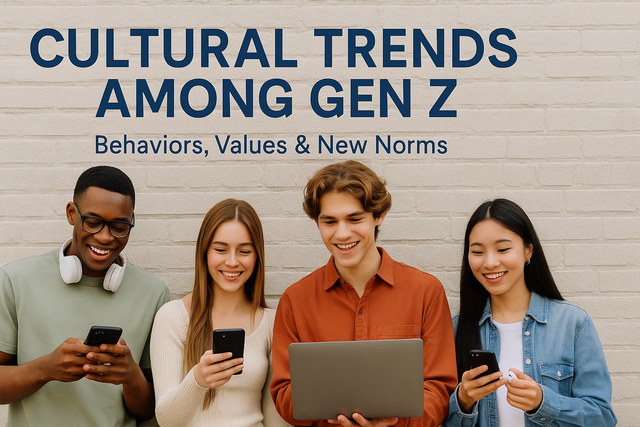
Cultural Trends Among Gen Z
Table of Content
- 1 Digital Natives in a Hyperconnected World
- 2 Value-Driven Consumer Behavior
- 3 A New Era of Identity Expression
- 4 Mental Health Awareness and Emotional Transparency
- 5 Creative Entrepreneurship and the Creator Economy
- 6 Political Engagement and Social Activism
- 7 The Fusion of Global and Local Culture
- 8 Conclusion
Digital Natives in a Hyperconnected World
Generation Z, born from the mid-1990s to the early 2010s, is the first cohort raised entirely within the digital age. Smartphones, high-speed internet, and social platforms were not innovations they discovered—they were the default environment. As a result, Gen Z approaches communication, entertainment, and community-building with a uniquely digital-first mindset.
Platforms like TikTok, Instagram, and Twitch are not merely social networks; they are cultural stages. Gen Z uses them to discover music, debate social issues, build niche communities, and express creativity through short-form videos, memes, and livestreams. The ability for ordinary users to launch global trends has flipped traditional influence hierarchies. A teenager at home can ignite a worldwide aesthetic or sound that millions adopt within days.
Their preference for authenticity over production value shapes online culture. Unfiltered storytelling, candid commentary, and “messy realness” resonate more than polished branding. In many cases, digital life also shapes offline behaviors, from dating norms to social connections—including how individuals seek relationships, sometimes through local services such as a dating agency in Sydney, which blends traditional matchmaking with Gen-Z-friendly digital tools.
Value-Driven Consumer Behavior
Gen Z’s economic landscape—steeped in the aftermath of the 2008 recession, rising living costs, and the disruptions of the COVID-19 pandemic—has produced a generation of cautious yet principle-focused consumers. Unlike previous generations that may have prioritized brand legacy or convenience, Gen Z consistently rewards companies that align with their values.
Sustainability, ethical sourcing, inclusivity, and transparency are core considerations in their purchasing decisions. They research company practices, support small or independent brands, and expect businesses to demonstrate social responsibility rather than merely assert it. Brands that meaningfully participate in culture—whether through collaborations with emerging artists or through public advocacy—tend to win Gen Z loyalty.
A New Era of Identity Expression
Gen Z stands out for its fluid approach to identity. With broad acceptance of diverse gender expressions, sexual orientations, and personal styles, this generation embraces a spectrum rather than rigid labels. Surveys show an increase in self-identification across the LGBTQ+ community and the normalization of nonbinary and gender-fluid identities.
Fashion has become one of their most visible tools of self-expression. Y2K aesthetics, thrift-store finds, cottagecore styles, and experimental DIY celebrity-inspired fashion coexist seamlessly. The goal is not to conform but to communicate individuality, creativity, and values. Social media allows users to explore different versions of themselves, join aesthetic subcultures, and evolve their identity narratives over time.
Mental Health Awareness and Emotional Transparency
Unlike previous generations, Gen Z openly prioritizes mental health. They grew up amid increasing awareness of anxiety, depression, burnout, and the psychological effects of constant connectivity. As a result, emotional wellbeing is treated as an essential part of everyday life.
They normalize discussions about therapy, self-care routines, and mental health struggles. Memes, humor, and shared vulnerability often serve as coping mechanisms, blending dark comedy with emotional honesty. Gen Z also challenges institutions and societal norms they believe intensify mental health pressures, fostering broader public conversations around accessibility, stigma, and the need for systemic change.
Creative Entrepreneurship and the Creator Economy
For many in Gen Z, creativity doubles as economic opportunity. They are entrepreneurial by nature, often launching side hustles ranging from digital art and fashion resale to content creation and freelance work. Platforms such as TikTok, YouTube, Patreon, and Shopify empower them to transform individual talents into streams of income.
This shift reflects Gen Z’s evolving relationship with work. They prioritize flexibility, purpose, and autonomy over traditional corporate structures or long-term loyalty. Work-life balance, meaningful projects, and self-directed careers are central elements of their vision for adulthood.
Political Engagement and Social Activism
Gen Z is among the most politically active generations in history. Growing up during major global movements—racial justice protests, climate action marches, LGBTQ+ rights campaigns, and debates surrounding gun safety—has instilled a strong sense of responsibility and urgency.
Their activism is both digital and physical. They use social media to mobilize awareness, share resources, and amplify marginalized voices, while also participating in grassroots organizing and community action. Intersectionality guides their understanding of social issues, linking race, gender, climate, and economic inequality into a holistic framework.
The Fusion of Global and Local Culture
Gen Z consumes culture globally but interprets it locally. Streaming services, global music scenes, anime, K-pop, Afrobeats, and international gaming communities have become ubiquitous across the generation. Cross-cultural exchange happens instantly, often leading to hybrid trends that blend influences from multiple regions.
At the same time, Gen Z shows renewed appreciation for local identity, heritage, and community traditions. They mix global inspirations with local culture in fashion, music, language, and lifestyle, creating a vibrant mosaic of interconnected influences.
Conclusion
Gen Z is reshaping cultural norms through authenticity, activism, digital fluency, and a desire for meaningful connection. Their impact spans fashion, business, politics, technology, and media. As this generation continues to grow, their values-driven mindset and creativity will influence global culture in profound and lasting ways.