
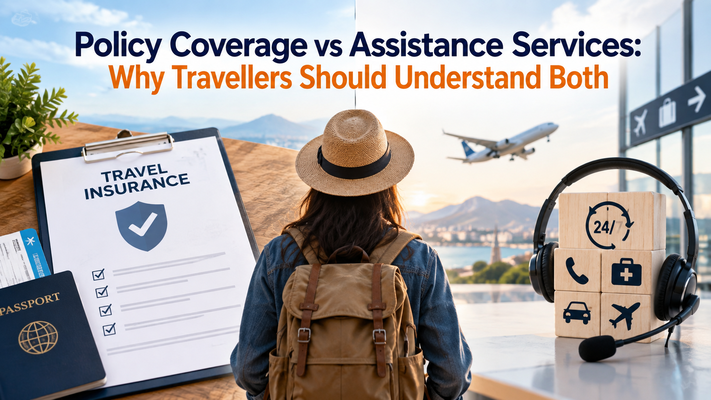
Policy Coverage vs Assistance Services: Why Travellers Should Understand Both
Travel insurance is not only about the expenses a policy may cover. It can also include assistance that helps you deal with problems during a trip, such as finding medical support or understanding the claim process.
Knowing the difference between policy coverage and assistance services helps you understand what financial protection may apply and what help may be available when you need it.
Table of Content
- The Two Parts Do Different Jobs
- Helps You Know What the Policy May Cover
- Shows You Where to Get Help during an Emergency
- Helps You Compare Policies More Properly
- Prevents Confusion between Assistance and Claim Approval
- Makes Medical Emergencies Easier to Manage
- Helps You Collect the Right Documents
- Final Thoughts
The Two Parts Do Different Jobs
Policy coverage and assistance services are connected, but they are not the same thing. Coverage tells you which situations may qualify for financial protection under the policy. Assistance tells you what support may be available when you need to deal with one of those situations.
| Policy Coverage | Assistance Services |
| Explains insured events and benefits | Helps you respond to an incident |
| States limits and applicable conditions | Guides you through practical next steps |
| May provide reimbursement or cashless support | May connect you with hospitals or claim teams |
| Is governed by the policy wording | Depends on the services offered with the policy |
Understanding this difference helps travellers know what support they can receive and which expenses may be considered under the policy.
Helps You Know What the Policy May Cover
Coverage tells you which events and expenses may be considered under the policy. These can include emergency medical treatment, baggage-related issues, trip interruption or other listed benefits. Knowing this before travel helps you avoid assumptions.
You can see which situations may receive financial support, what limits apply and which conditions matter. It also makes policy comparison more practical because you are looking at benefits that match your trip.
Shows You Where to Get Help during an Emergency
Assistance services matter because travellers may not know whom to contact in an unfamiliar place. A sudden illness, lost passport, or travel disruption can become harder to manage when you are abroad.
An assistance team may guide you on the next steps, explain the process or direct you towards relevant support. This practical help is different from the policy benefit itself. Knowing the contact process in advance can save time during a stressful situation.
Helps You Compare Policies More Properly
A policy should not be judged only by the number of benefits listed. Travellers should also check how help is provided when those benefits need to be used. Someone looking for the best travel insurance for a particular journey should consider both the benefits and the available assistance.
It is useful to know how emergency contact, claim guidance or hospital coordination works. Looking at both gives a clearer idea of whether the policy suits the destination and travel plans.
Prevents Confusion between Assistance and Claim Approval
Receiving assistance does not automatically mean that every related expense will be payable. The assistance team may explain what to do, help you find a service or guide you on documentation, while the claim is assessed under the policy terms.
Understanding this difference helps travellers keep realistic expectations. It also encourages them to check the applicable benefit limits, conditions and required documents instead of assuming that support and claim approval mean the same thing.
Makes Medical Emergencies Easier to Manage
Medical emergencies abroad can require quick decisions. You may need to find a nearby hospital, share your policy details, understand the treatment process or keep documents for a claim. When planning a US trip, travellers often look at travel insurance USA policies mainly for medical cover.
However, it is equally useful to understand the assistance services available with the policy. Knowing whom to contact and what steps to follow can make the situation easier to manage.
Helps You Collect the Right Documents
Coverage tells you what may be claimed, while assistance can help you understand which documents may be required. Depending on the incident, these could include medical records, bills, receipts, travel papers or official reports.
Knowing this early is useful because some documents are easier to obtain while you are still at the hospital, airport, hotel or local authority office. Keeping the right records can make the claim process easier to follow later.
Final Thoughts
Travellers should understand both policy coverage and assistance services because they serve different purposes. Coverage explains the financial protection available for defined situations, while assistance helps you respond when those situations occur.
Knowing both can help you compare policies properly, act with more clarity, keep the right documents and follow the required process. Benefits and services remain subject to the terms, conditions and limits of the policy selected.