
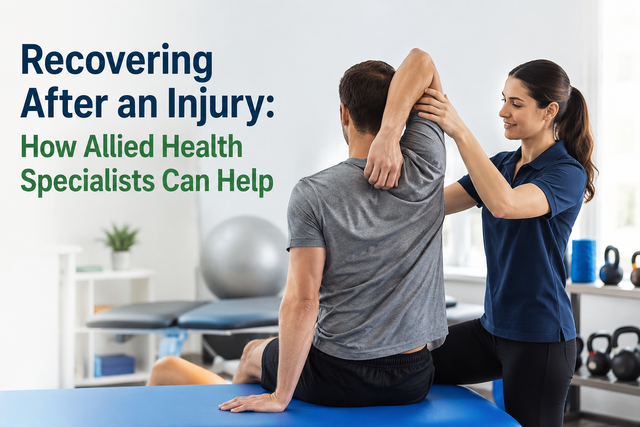
Recovering After an Injury: How Allied Health Specialists Can Help
Injury recovery is more than just taking a break and medication. Allied health professionals, such as physiotherapists, occupational therapists, chiropractors, speech therapists, and exercise physiologists, deliver specialized services that ensure healing, restore bodily functions, and promote wellness. Selecting the right therapist and getting involved in your therapy is an important step to success during your recovery process. The next five recommendations will help you cooperate well with an allied health professional while organizing your rehabilitation process efficiently and personally.
Table of Content
Choose the Right Specialist for Your Injury
Since all injuries have their specific issues, it will be essential to choose the right health care professional who is capable of dealing with your specific case. Look at your health issue and find a professional who can match it with your needs for treatment. For example, a physiotherapist will be able to assist in recovering movement after a sports injury, while an occupational therapist will help you regain your independence after surgery or any other trauma.
It will be important to study the professional and his or her experience before choosing the specialist for your case. Also, consider reading patient testimonials and discussing potential candidates with your primary health care professional.
Communicate Openly About Your Symptoms and Goals
Communication is key for effective rehabilitation. In consultations, be honest about your symptoms, explaining when the pain occurs, what activates it, and what you have experienced in terms of improvements. Your doctor will take all information into account to diagnose the problem properly and alter the course of your treatment.
Talk about your lifestyle, work, and hobby preferences, as well as your recovery aims. Regardless of whether you want to play your sport again, go back to work, or even live an ordinary life without discomfort, the discussion will help your doctor tailor your training to fit your needs.
Understand How Your Specialist Can Support Legal Proceedings
Some injuries occur due to workplace accidents, car crashes, or other cases that involve insurance claims or litigation. In such cases, your allied health care professional will make extensive notes about your progress toward recovery. Such documentation can be very helpful in proving the level of injury that occurred.
Depending on the circumstances, legal professionals may also hire an independent medical examiner to provide an impartial evaluation of your condition. Maintaining complete records, attending every appointment, and following recommended treatment demonstrate ongoing efforts toward recovery while ensuring medical information remains consistent throughout any legal process.
Stay Committed to Your Treatment Plan
Recovery is never going to happen in one visit only. Most rehabilitation processes involve repetitive visits, exercises, and gradual improvement over time. Compliance with your doctor’s instructions and doing exercises at home will help you achieve much better results.
Pay attention to your progress in terms of changes in pain, mobility, strength, and general functioning. In case you experience any unpleasant sensations during some exercises or find them too easy for you, discuss that with your specialist instead of adjusting anything yourself. Maintaining consistency and following professional guidance helps reduce setbacks while supporting a safer, more efficient recovery process.
Review Your Progress and Adjust Your Recovery Plan
It is common for healing not to be a straight path, and therefore evaluation needs to be done to ensure that the rehabilitation process is on track. This will involve your allied health expert carrying out an assessment of how much you have healed regarding your movements, strength, balance, etc., to see whether the treatments being done are still suitable or require any adjustments.
To do this, you need to ask questions regarding the progress of your healing to help understand the reasoning behind treatment alterations that will keep you motivated and confident throughout the whole process of rehabilitation.
In summary, seeking help from an allied health expert after an injury is an essential step that will help you achieve recovery safely and effectively. The choice of an appropriate health expert, clear communication, commitment to the treatment process, knowledge of the role played by medical records during legal proceedings, and constant monitoring of your condition all work towards improving rehabilitation success. With an active involvement in the whole process of your recovery, you can increase your chances of recovery and resilience.