
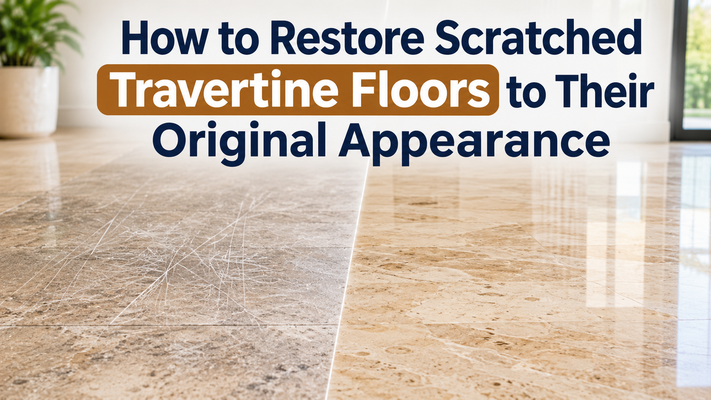
How to Restore Scratched Travertine Floors to Their Original Appearance
Travertine floors bring natural warmth, texture, and character to residential and commercial spaces. Their distinctive patterns and earthy tones make them a popular flooring choice, but regular foot traffic, moving furniture, and everyday use can gradually leave visible scratches and surface marks. These imperfections can make the flooring look worn and take away from its original appearance.
The good news is that scratched travertine does not necessarily need to be replaced. Professional travertine restoration can completely remove scratches and help return the stone to its original look. With the right equipment and restoration techniques, even heavily scratched surfaces can be treated without removing the existing flooring.
Understanding what causes scratches and how professional restoration works can help you maintain the appearance of your travertine floors.
What Causes Scratches on Travertine Floors?
Travertine is a natural stone with a porous structure. Although it is durable, its surface can still develop scratches through everyday use and unsuitable maintenance practices.
Some common causes include:
1. Foot Traffic and Trapped Dirt
Dust, sand, and small particles can collect on travertine floors. When people walk across the surface, these particles can act as abrasives and gradually create scratches.
Entryways, hallways, kitchens, and other frequently used areas are particularly susceptible to this type of wear.
2. Moving Furniture and Heavy Objects
Dragging chairs, tables, cabinets, and other heavy objects across travertine can leave visible scratches. Without protective furniture pads, even routine rearrangement can affect the stone’s finish.
3. Incorrect Cleaning Equipment
Abrasive brushes, rough scouring pads, and unsuitable cleaning tools can scratch or wear down travertine. Using cleaning products that are not designed for natural stone may also affect its surface.
4. Poor Maintenance Practices
Allowing dirt and debris to accumulate, using harsh cleaning chemicals, or neglecting regular maintenance can contribute to surface deterioration.
Travertine requires suitable cleaning methods to preserve its natural appearance and finish.
Can Scratched Travertine Floors Be Restored Completely?
Yes. Professional restoration can completely remove scratches from travertine floors and restore their original appearance.
Rather than simply concealing surface marks, the restoration process uses specialised equipment and appropriate abrasives to treat the affected stone. The techniques are selected according to the existing finish and the condition of the flooring.
This approach can address scratches across the surface and help achieve a consistent finish throughout the restored area.
It is important to distinguish scratches from other types of damage. Structural cracks, loose tiles, and movement beneath the flooring require separate assessment because they involve issues beyond surface restoration.
How to Restore Scratched Travertine Floors
Professional travertine restoration involves several stages to remove scratches, refine the surface, and achieve the required finish.
Step 1: Inspect the Travertine Surface
The first step is to assess the flooring and identify scratches, dull patches, stains, holes, and other imperfections.
The inspection also considers the existing finish, the condition of the stone, and the extent of the surface damage. This helps determine the appropriate restoration method.
Step 2: Clean the Floor Thoroughly
Before mechanical restoration begins, dirt, dust, grime, and other contaminants must be removed.
Natural stone requires suitable cleaning products that will not damage its surface. Thorough preparation helps ensure that loose particles do not interfere with the restoration process.
Step 3: Grind the Travertine Surface
Grinding is an important stage in removing scratches and surface imperfections. Specialist equipment and suitable abrasives are used to treat the affected areas and refine the stone.
The process is adjusted according to the condition of the travertine and the finish required. Proper grinding helps remove scratches completely rather than simply making them less noticeable.
Step 4: Hone the Stone
After grinding, honing may be carried out using progressively finer abrasives. This refines the surface, removes remaining scratches, and creates a more consistent finish.
Honing is particularly useful when the travertine has uneven areas or visible differences in surface appearance.
Step 5: Repair Holes and Surface Imperfections
Travertine naturally contains small holes and cavities. Some may become more noticeable over time or collect dirt, affecting the overall appearance of the flooring.
Where necessary, suitable fillers can be used to repair these areas and create a more uniform finish. The choice of material depends on the stone’s characteristics and the desired result.
Step 6: Polish or Finish the Travertine
Once the surface has been restored, the final finishing process helps achieve the required appearance.
Depending on the original finish and the property’s requirements, travertine can be finished with a honed, satin, or polished appearance. The aim is to restore the stone’s natural character and create a consistent result across the floor.
Step 7: Apply a Suitable Sealer if Required
Sealing may be recommended to help reduce the absorption of spills and contaminants. The appropriate sealer depends on the type of travertine, its finish, and where it is installed.
Although sealing can support ongoing maintenance, it does not make the stone completely stain-proof. Suitable cleaning practices remain important.
Can Old and Heavily Scratched Travertine Floors Be Restored?
Yes. Even older travertine floors with noticeable scratches and surface wear can be restored, provided the stone is suitable for treatment.
Professional restoration can address scratches completely, improve dull areas, and renew the overall finish. It can also include suitable repairs for holes and other surface imperfections.
Restoring existing travertine may be a practical alternative to replacement, particularly when the flooring is structurally sound. It can help preserve the original stone while avoiding the disruption associated with removing and installing new flooring.
However, extensive cracking, loose tiles or underlying structural problems may require additional repairs. A professional inspection can establish whether surface restoration is sufficient.
How to Prevent Scratches on Travertine Floors
Once your travertine floors have been restored, appropriate maintenance can help preserve their appearance.
- Sweep or dust regularly: Remove sand, grit, and loose dirt before they cause abrasion.
- Use furniture protection: Place suitable pads beneath chairs, tables and other furniture.
- Choose natural stone cleaners: Avoid acidic products and harsh chemicals that may damage travertine.
- Clean spills promptly: This helps minimise the risk of stains penetrating the porous stone.
- Use protective mats: Place suitable mats near entrances to reduce the amount of dirt brought indoors.
- Avoid abrasive cleaning tools: Rough brushes and scouring pads can affect the surface finish.
- Follow professional maintenance advice: Sealing and cleaning requirements depend on the type and finish of the stone.
These simple practices can help reduce avoidable damage and maintain the restored finish.
Travertine Restoration vs Marble Restoration
Travertine and marble are both natural stones, but they have different characteristics and may require different restoration techniques.
Travertine is typically recognised by its porous structure and natural cavities, while marble has a distinct crystalline structure and can be particularly susceptible to etching from acidic substances.
Both materials can benefit from professional grinding, honing and polishing, but the restoration process must be selected according to the stone type and its condition.
If your marble surfaces are scratched, dull, or worn, professional marble restoration in Perth from Nanoworx can help address the damage and restore the stone’s original appearance.
Bring Your Scratched Travertine Floors Back to Their Original Appearance
Scratched travertine floors do not automatically need to be replaced. Professional restoration can completely remove scratches and bring back the stone’s original appearance while preserving the existing flooring.
From grinding and honing to polishing and suitable surface repairs, each stage contributes to improving the condition and finish of the stone. The right restoration approach depends on the type of travertine, its existing condition, and the result required.
If your travertine flooring has lost its original appearance, consider professional restoration before committing to replacement. With appropriate treatment and ongoing care, your natural stone floors can continue to enhance your space for years to come.