How Does Laser Engraving Stainless Steel Create Permanent and High-Contrast Markings?
Industries such as manufacturing, electrical engineering, mining, healthcare, automotive, and construction rely on durable identification solutions that can withstand harsh operating environments. Whether it’s asset tags, compliance plates, serial number labels, or industrial signage, businesses need markings that remain legible for years without fading, peeling, or wearing away.
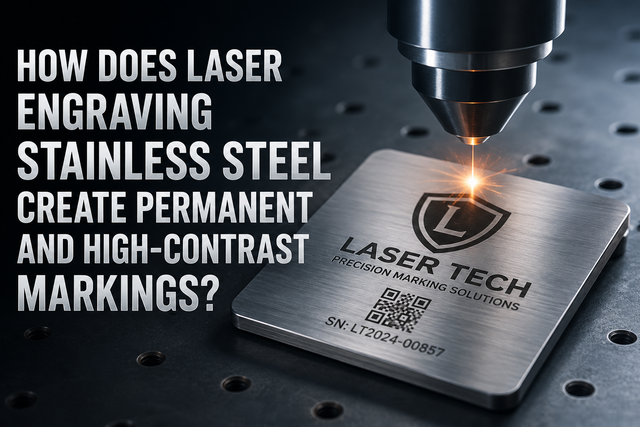
This is where laser engraved stainless steel stands out. Unlike traditional printing or adhesive labels, laser engraving produces permanent, high-contrast markings directly on the metal surface. Using a modern engraving machine, businesses can create precise text, logos, QR codes, barcodes, and identification numbers that maintain exceptional clarity even in demanding conditions.
In this article, we’ll explain how laser engraving works, why stainless steel is one of the best materials for permanent marking, and why laser technology has become the preferred choice for industrial identification.
Table of Content
- What Is Laser Engraving Stainless Steel?
- Why Stainless Steel Is Ideal for Laser Engraving
- How an Engraving Machine Creates Permanent Markings
- Why Laser Engraving Produces High-Contrast Results
- Benefits of Laser Engraving Stainless Steel
- Common Applications Across Industries
- Laser Engraving vs Traditional Marking Methods
- Choosing the Right Engraving Machine
- Conclusion
What Is Laser Engraving Stainless Steel?
Laser engraving stainless steel is a process that uses a highly focused laser beam to permanently mark the surface of stainless steel. The laser generates intense heat that either removes a microscopic layer of material or alters the surface structure, creating sharp and durable markings.
Unlike ink printing or stickers, laser engraving becomes part of the metal itself, making the marking resistant to fading, scratching, chemicals, moisture, and heat.
Modern laser systems can engrave:
- Company logos
- Serial numbers
- Asset tags
- QR codes
- Barcodes
- Safety labels
- Compliance information
- Product identification
Why Stainless Steel Is Ideal for Laser Engraving
Stainless steel is widely used across industrial sectors because it offers outstanding durability and corrosion resistance.
Its advantages include:
- Excellent corrosion resistance
- High strength
- Heat resistance
- Chemical resistance
- Long service life
- Professional appearance
When combined with laser engraving, stainless steel becomes one of the most reliable materials for permanent industrial identification.
How an Engraving Machine Creates Permanent Markings
A modern engraving machine uses computer-controlled laser technology to produce extremely accurate markings.
The process typically follows these steps:
1. Digital Design Preparation
The artwork or identification information is prepared using compatible design software.
This may include:
- Text
- Logos
- Serial numbers
- QR codes
- Barcodes
- Graphics
The digital file is then sent directly to the engraving machine.
2. Laser Beam Focusing
The engraving machine focuses a high-powered laser beam onto the stainless steel surface with incredible precision.
The laser follows the programmed design exactly, ensuring every marking is accurate and repeatable.
3. Surface Modification
As the laser contacts the stainless steel, intense heat alters or removes a microscopic portion of the surface.
Depending on the laser settings and application, this process creates:
- Dark annealed markings
- Light engraved markings
- Deep engraved text
- High-contrast identification
Because the marking becomes part of the metal, it cannot peel or wear away like printed labels.
Why Laser Engraving Produces High-Contrast Results
One of the biggest advantages of laser engraving is its ability to create highly visible markings.
Several factors contribute to this high contrast:
Precision Laser Control
Modern engraving machines allow operators to control:
- Laser power
- Speed
- Frequency
- Focus
- Engraving depth
These settings optimise contrast for different stainless steel grades.
Surface Colour Change
In some applications, the laser changes the oxide layer on the stainless steel rather than removing material.
This produces a dark, highly visible mark without compromising the metal’s integrity.
Clean, Sharp Edges
Laser technology produces extremely fine lines with exceptional detail.
This makes small text, logos, and QR codes easy to read and scan.
Benefits of Laser Engraving Stainless Steel
Permanent Identification
Laser-engraved markings become part of the stainless steel surface and remain legible throughout the product’s lifespan.
Exceptional Durability
Laser engraving withstands:
- UV exposure
- Moisture
- Chemicals
- Abrasion
- High temperatures
- Harsh industrial environments
High Accuracy
Computer-controlled engraving machines deliver consistent, repeatable results across every production run.
Fast Production
Modern laser systems can engrave large batches quickly while maintaining outstanding precision.
Minimal Maintenance
Laser engraving machines require fewer consumables than traditional marking methods, helping reduce long-term operating costs.
Common Applications Across Industries
Laser-engraved stainless steel is used in numerous industries.
Manufacturing
Manufacturers engrave:
- Machine identification plates
- Product serial numbers
- Compliance labels
- Component tracking
Electrical Industry
Electrical contractors and switchboard manufacturers use engraved stainless steel for:
- Equipment labels
- Panel identification
- Safety plates
- Circuit labels
Medical Equipment
Hospitals and laboratories require permanent markings that withstand repeated sterilisation.
Laser engraving is commonly used on:
- Surgical instruments
- Stainless steel trays
- Medical devices
- Laboratory equipment
Automotive Industry
Vehicle manufacturers and workshops use laser engraving for:
- VIN plates
- Engine identification
- Compliance plates
- Asset management
Mining and Construction
Heavy equipment operates in harsh environments where permanent identification is essential for maintenance and asset tracking.
Laser Engraving vs Traditional Marking Methods
Compared to conventional marking techniques, laser engraving offers significant advantages.
| Feature | Laser Engraving | Printed Labels |
| Permanence | Excellent | Can fade or peel |
| Chemical Resistance | Excellent | Limited |
| Heat Resistance | Excellent | Moderate |
| Abrasion Resistance | Excellent | Low |
| Maintenance | Minimal | Frequent replacement |
| Long-Term Durability | Outstanding | Limited |
For industrial applications, laser engraving provides a more reliable and cost-effective solution over the long term.
Choosing the Right Engraving Machine
Selecting the right engraving machine depends on your production needs.
Key considerations include:
- Stainless steel thickness
- Production volume
- Required marking speed
- Engraving precision
- Work area size
- Software compatibility
- Future production growth
Working with an experienced engraving equipment supplier ensures you choose a system that delivers the performance and reliability your business requires.
Conclusion
Laser engraving stainless steel has become the industry standard for creating permanent, high-contrast markings on industrial equipment, asset tags, compliance plates, and identification labels. By using a precision engraving machine, businesses can produce durable markings that resist corrosion, chemicals, heat, and everyday wear while maintaining exceptional clarity over time.
Whether you’re manufacturing industrial equipment, producing electrical labels, managing assets, or marking medical devices, laser engraving offers unmatched accuracy, efficiency, and long-term value. Investing in the right engraving technology helps improve traceability, meet compliance requirements, and ensure every stainless steel marking remains clear and reliable for years to come.