
How Modern Employee Engagement Tools Support Remote and Hybrid Teams
Today, small business owners aren’t just navigating rising medical inflation. They’re managing something trickier; keeping remote and hybrid teams emotionally invested when work happens across screens, time zones, and WhatsApp groups. Talent is mobile. Loyalty is fragile. And culture no longer lives inside an office.
That’s why employee engagement tools have quietly moved from “nice-to-have HR software” to mission-critical infrastructure. From collaboration platforms to health benefits, today’s best employee engagement tools work together to recreate connection, clarity, and care, without forcing SMEs to spend like large enterprises.
Table of Content
Engagement Starts With Connection, Not Perks
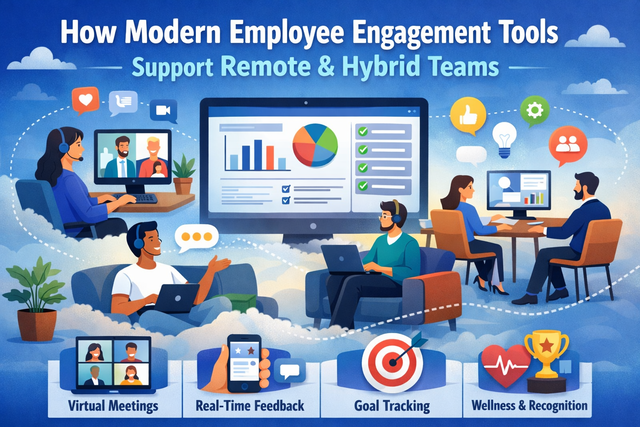
For most remote teams, engagement begins with communication. Tools like Microsoft Teams and Zoom are now table stakes. They power daily stand-ups, client reviews, training sessions, and those quick five-minute syncs that prevent misunderstandings. Their ease of use matters. When tools are already embedded in workflows, engagement friction drops.
But communication alone doesn’t sustain motivation.
Project and performance tools step in here. They give distributed employees visibility on priorities, ownership, and progress. In remote setups, ambiguity kills engagement faster than workload. Clear goals, regular check-ins, and lightweight feedback loops help teams feel anchored, even when they’re not co-located.
This layered approach is how modern employee engagement tools operate most effectively. No single platform does everything. Engagement is an ecosystem.
The Democratization Angle: Small Teams Finally Have Access
Until recently, meaningful engagement platforms were designed for scale. Annual contracts. Large minimum headcounts. Complex rollouts. If you were a five- or ten-person company, you were often excluded.
That’s changing fast.
Monthly subscription models across categories, whether it’s rewards platforms or healthcare-led employee engagement tools, are removing the entry barrier. Today, even a three-person startup can offer peer recognition, pulse surveys, or health benefits without locking up working capital.
This democratization matters most for hybrid teams. When people aren’t physically together, engagement has to be structured. Monthly tools let founders start small, test adoption, and expand as the team grows. No overcommitment. No sunk cost anxiety.
Pro-tip: Don’t roll out five tools at once. Start with one collaboration tool, one performance or rewards layer, and one wellbeing layer. Adoption beats ambition every time.
The Retention Angle: Competing With MNCs on What Actually Matters
SMEs can’t outspend MNCs. But they can out-support them.
Rewards and recognition platforms play a big role here. Timely appreciation, especially peer-driven; travels far in remote teams. A public “thank you” or milestone reward often matters more than a delayed appraisal bonus.
But retention today goes deeper than recognition.
Healthcare and well-being-focused employee engagement tools are becoming decisive. Access to tele consultations, mental health support, OPD benefits, or preventive care sends a clear message: the company cares beyond output. For remote employees dealing with burnout, isolation, or family health issues, this support isn’t abstract; it’s immediate.
Together, they strengthen retention in ways salary alone can’t.
The Financial Agility Angle: Engagement Without Straining Cash Flow
Working capital discipline is non-negotiable for startups and MSMEs. Locking into large annual premiums, whether for insurance or engagement software, creates risk, especially when team sizes fluctuate.
Pay-as-you-go employee engagement tools solve this. Monthly pricing aligns costs with headcount and revenue realities. If you hire fast, benefits scale. If you slow down, costs adjust. That flexibility is critical in hybrid teams where hiring is often opportunistic.
This applies across categories, from performance tools to rewards platforms, but it’s especially relevant for healthcare benefits, where traditional annual models have historically been rigid and expensive.
Smart founders treat engagement spend like any other operating expense. Review usage. Talk to employees. Double down on what delivers value. Modern employee engagement tools finally allow that level of control.
Looking Ahead
Remote and hybrid work aren’t trends anymore. They’re infrastructure. As this becomes permanent, engagement will no longer be about games or office snacks; it will be about systems that support people consistently, wherever they work.
The future of India’s workforce will belong to companies that blend collaboration, recognition, performance, and health into a single, thoughtful engagement stack. Founders who get this right won’t just retain talent. They’ll build teams that grow stronger with distance and healthier with time.