How Packaging Decisions at the Jewelry Factory Affect Your Brand Unboxing Experience
Packaging choices made at the production stage shape how customers perceive a jewelry brand from the first moment they open a parcel. These decisions influence brand value, repeat purchases, and even return rates. For many jewelry brands, packaging feels like a final step, but it often determines the actual customer experience. A reliable jewelry factory can help align packaging with product positioning and retail goals from the start.
Table of Content
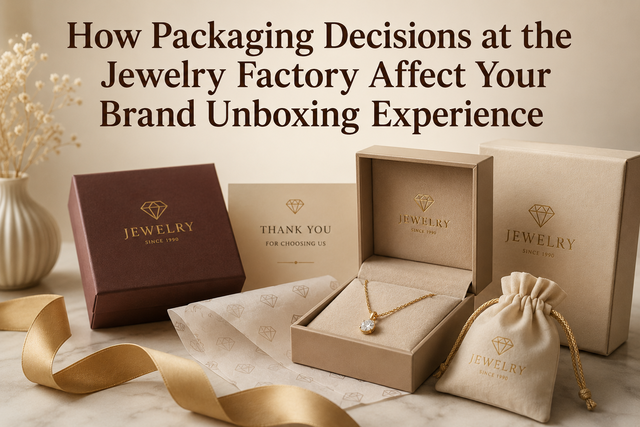
Jewelry Packaging Options at the Jewelry Factory Level
A professional jewelry manufacturer typically offers several packaging formats that serve different retail and distribution needs. Each format supports a different brand message and customer expectation.
- Rigid jewelry boxes
Rigid boxes made from cardboard, leatherette, or velvet-lined interiors are common for premium collections. They create a structured form that protects delicate items and supports a more refined brand image. - Drawstring and zip pouches
Organza, velvet, or kraft pouches are often used for lightweight collections or travel-friendly packaging. These options reduce bulk while still offering a branded touch. - Custom inserts and foam trays for multi-piece sets
Multi-item jewelry sets require stable positioning. Foam or molded inserts help prevent movement during transport and maintain presentation order when opened. - Poly bags and header cards for retail display
Retail-ready items often rely on simple poly bags combined with printed header cards. This format supports high-volume distribution while maintaining basic branding. - Outer shipping cartons and protective void fill
Secondary packaging protects goods during logistics. Strong cartons and structured void fill reduce damage risk and support smoother delivery outcomes.
How Material Choices Signal Brand Positioning
Material selection at the jewelry factory level sends a direct signal about brand positioning. Customers often judge product value within seconds of opening the package.
Box board weight and perceived quality
Heavier board materials usually signal higher quality. Lightweight boards may feel less durable, which can reduce perceived value even if the jewelry quality is strong.
Lining materials and tactile impression
Velvet lining often creates a soft, premium feel. Satin provides a smoother finish, while recycled kraft paper supports an eco-conscious brand identity.
Closure systems and finishing details
Magnetic closures, ribbon ties, and drawer-style boxes each create a different unboxing rhythm. Magnetic closures feel modern and secure, while ribbon ties feel more decorative and gift-focused.
Surface finish choices
Matte lamination gives a subtle and modern look. Gloss finishes appear brighter and more retail-focused. Foil stamping adds visual contrast and helps highlight brand logos without overwhelming the design.
Jewelry Packaging Specifications to Include in Your Brief
Clear specifications help a jewelry manufacturer produce packaging that aligns with brand expectations. A well-prepared brief reduces revisions and supports consistent output across batches.
Pantone color references
Exact Pantone codes for both exterior and interior surfaces help maintain brand consistency. Color differences between batches often occur without clear standards.
Logo placement and print method
Brands should define logo position, size, and method such as embossing, debossing, silk printing, or foil stamping. Each method creates a different visual and tactile effect.
Insert copy and QR code placement
Care cards, warranty notes, or brand messages should be planned early. QR codes can link to product care instructions or brand stories, but placement must not disrupt visual balance.
Language and compliance labels
Different markets require different labeling rules. A jewelry factory can adjust packaging text to match regional compliance needs, especially for export-focused brands.
Jewelry Packaging as Part of the Product Experience
Star Harvest works as a jewelry manufacturer that integrates packaging design into the full production process. It provides structured support for brands that want packaging to match product quality and brand identity.
The company offers FSC-certified material options for brands with sustainability goals. It also supports structural customization, which allows brands to adjust box shape, closure style, and internal layout based on product type.
Color matching follows brand references to maintain visual consistency across packaging batches. This helps jewelry brands build recognition across different sales channels such as retail stores, e-commerce platforms, and wholesale distribution.
Star Harvest also supports Amazon FBA-compliant labeling. This helps brands reduce packaging issues during cross-border logistics and improves warehouse acceptance rates.
In addition, the company provides in-house product photography. This service helps brands present a consistent visual identity across catalogs, websites, and marketing materials without relying on separate vendors.
Why Packaging Should Be Part of the First Production Discussion
Many jewelry brands treat packaging as a later step after product design is complete. This approach often leads to mismatches between product positioning and final presentation.
A more effective approach is to discuss packaging together with product development. Early coordination allows adjustments in box size, insert design, and material selection before production begins.
Star Harvest supports this approach by integrating packaging consultation into its jewelry factory workflow. It helps brands align design decisions with production capabilities from the beginning, rather than adjusting after sampling.
This reduces delays and helps maintain consistent quality across both product and packaging.
Conclusion
Packaging decisions made at a jewelry factory shape more than appearance. They influence brand perception, customer satisfaction, and operational efficiency. From material selection to structural design, each choice contributes to how customers experience a jewelry brand.
Jewelry brands that treat packaging as part of the product often achieve more consistent presentation across markets. Star Harvest provides integrated packaging support as part of its jewelry packaging and manufacturing services, helping brands build a more cohesive product experience from production to delivery.
For brands planning their next collection, it is often practical to connect with Star Harvest at starharvestcn.com early in the process. This allows packaging requirements to be discussed as part of the first production conversation rather than a final adjustment.