
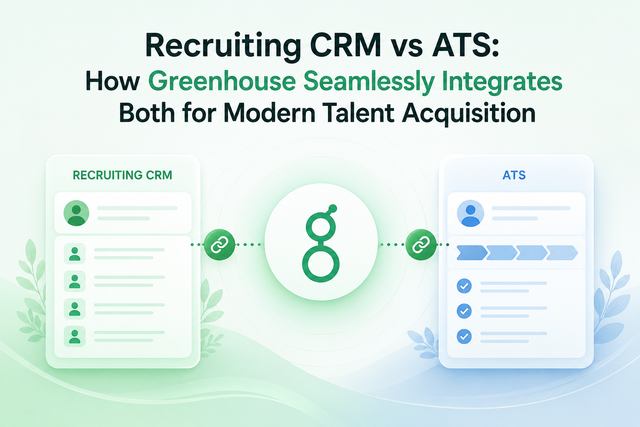
Recruiting CRM vs ATS: How Greenhouse Seamlessly Integrates Both for Modern Talent Acquisition
Key Takeaways
- Understanding the distinct purposes of Recruiting CRMs and ATS is essential for modern recruitment strategies.
- Greenhouse unifies CRM and ATS functionality in a single platform, reducing complexity and streamlining hiring.
- Integrated workflows help organizations build robust talent pipelines, shorten time-to-hire, and enhance the candidate experience.
- Structured and data-driven processes bring consistency and provide actionable insights for improvement.
The recruitment landscape is rapidly evolving. As businesses face escalating pressure to attract and retain top talent, distinguishing between a Recruiting CRM and an ATS is crucial. Companies often wrestle with purchasing or integrating these tools, but solutions like Greenhouse are redefining the landscape by merging both into a unified system. If you’re in the early stages of your research or seeking clarity, this primer explains the difference between recruiting CRM vs ATS. It showcases how a unified approach can drive success.
Organizations typically juggle several tools to nurture candidates, manage applications, and ensure a fair process. Greenhouse streamlines these interconnected steps. By providing recruiters with a single platform to source, engage, and evaluate candidates, Greenhouse delivers efficiency and insight while empowering you to focus on building relationships and elevating the entire hiring journey. Proactively managing talent pipelines was once seen as a best practice for large companies, but it is rapidly becoming a necessity for businesses of all sizes.
Candidates expect rapid responses, clear communication, and transparency throughout the process. Technology that bridges candidate relationship management with structured application workflows has never been more vital. The advantages are significant: improved response time, lower drop-off rates, and actionable insights that inform future recruitment efforts. With the right system, even small business owners and hiring managers can build world-class hiring experiences that attract and convert sought-after candidates.
Understanding the Distinction Between Recruiting CRM and ATS
To truly optimize hiring, it helps first to clarify the roles of each system:
Recruiting CRM
This tool is designed to help organizations proactively identify, nurture, and build relationships with talent before candidates formally apply. Recruiting CRMs help engage passive candidates, build talent pools, and map pipelines for future openings.
ATS
The Applicant Tracking System picks up once a candidate applies. It organizes and tracks applicants through defined stages, review, interview, offer, and onboarding. ATS platforms maintain a structured, centralized process that supports compliance and communication.
The difference is important. A CRM focuses on “future fit” talent and engagement, while an ATS is about process automation, compliance, and structured hiring once a resume is submitted. Many companies need to balance proactive and reactive hiring needs. Forbes emphasizes the strategic importance of adopting an integrated approach that combines the ongoing relationship management found in CRMs with the operational rigor of ATS solutions, fostering greater candidate satisfaction and reducing overall hiring costs.
How Greenhouse Seamlessly Integrates CRM and ATS Functionalities
Greenhouse delivers a cohesive platform that merges the benefits of a CRM and an ATS. Here’s how it helps your process:
Unified Candidate Management
Recruiters and hiring managers can manage the entire candidate lifecycle, sourcing, engaging, and evaluating candidates, all from one dashboard. This reduces duplicate work and ensures information never falls through the cracks.
Enhanced Candidate Experience
By keeping all communications and tasks streamlined in one system, Greenhouse offers consistent, timely updates to candidates and maintains a transparent application process.
Data-Driven Insights
The platform aggregates analytics across sourcing, engagement, and hiring. These insights empower teams to refine strategies and demonstrate the impact of each recruitment campaign.
This linkage minimizes manual hand-offs, fosters collaboration, and provides a single source of truth for hiring data.
Addressing Common Recruitment Challenges with Greenhouse
Recruitment bottlenecks often stem from disconnected systems and scattered communications. Greenhouse helps resolve these challenges:
Reducing Time-to-Hire
Automated task assignments, reminders, and scheduling tools help accelerate the hiring pipeline from initial contact to offer.
Standardizing Candidate Evaluation
Structured interview kits and scorecards promote objective, fair, and repeatable candidate assessments that reduce bias and ensure team alignment.
Expanding Talent Pipelines
By nurturing relationships with passive candidates and maintaining robust talent pools in the CRM, Greenhouse allows organizations to be ready when opportunities open.
The Harvard Business Review notes that organizations with strong talent pipelines and structured processes consistently outperform competitors in both speed and quality of hiring.
Real-World Impact: Greenhouse’s Proven Success
Greenhouse’s approach is not just theoretical. By relying on proven workflows and candidate-nurture campaigns, many organizations have reported marked improvements in key recruiting metrics. For white-collar roles, the Society for Human Resource Management (SHRM) pegs the average time-to-fill at 44 days. Companies leveraging Greenhouse’s combination of ATS structure and CRM outreach often meet or surpass this benchmark, reducing time-to-fill and driving stronger hires. Structured hiring frameworks, robust analytics, and automated workflows translate into more satisfying experiences for both recruiters and candidates, as well as a demonstrable return on investment for organizations of all sizes.
Frequently Asked Questions
What distinguishes a Recruiting CRM from an ATS?
A Recruiting CRM focuses on building and nurturing talent pools and relationships before candidates apply. At the same time, an ATS takes over post-application to streamline evaluation, communication, and progression through the hiring stages.
Can Greenhouse function as both a Recruiting CRM and an ATS?
Yes, Greenhouse offers both Recruiting CRM and ATS capabilities in a single platform, ensuring a connected, streamlined recruitment process from start to finish.
How does Greenhouse improve time-to-hire metrics?
Automated workflows, structured interview kits, and proactive talent-sourcing features reduce manual tasks and enable teams to move candidates through the hiring funnel more quickly.
Is Greenhouse suitable for small businesses?
The platform offers scalable solutions that benefit both small businesses and large enterprises. Small teams can leverage Greenhouse’s integrated features as their recruitment needs grow.
How does Greenhouse enhance the candidate experience?
Consistent communication, rapid follow-up, and a transparent hiring process make for a positive experience for every candidate who interacts with your brand.
Conclusion
Understanding the difference between a Recruiting CRM and an ATS is essential to building an effective, modern hiring strategy. While a CRM focuses on nurturing relationships and engaging passive talent, an ATS ensures structured, compliant, and efficient management of active applicants. Platforms like Greenhouse bridge this gap by integrating both systems into a unified solution that supports the entire recruitment lifecycle from sourcing to onboarding.
This integration helps organizations streamline workflows, reduce time-to-hire, and maintain a consistent and positive candidate experience. By centralizing data and standardizing evaluation processes, hiring teams can make more informed, objective decisions backed by actionable insights. In a competitive talent market, adopting an integrated approach not only improves efficiency but also strengthens employer branding and long-term hiring success. Ultimately, leveraging a combined CRM and ATS system empowers organizations to attract, engage, and secure top talent more effectively and strategically.