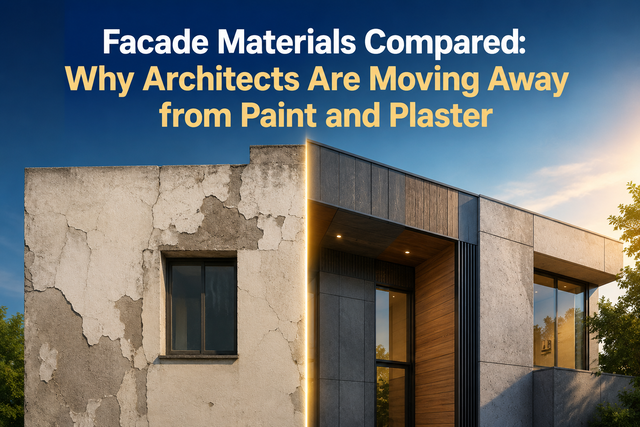
Facade Materials Compared: Why Architects Are Moving Away from Paint and Plaster
A building’s facade is often its most defining architectural feature, shaping first impressions while protecting the structure from weather and environmental exposure. Traditionally, paint and plaster have been the preferred choices for exterior finishes due to their affordability and versatility. However, modern architecture demands materials that deliver more than appearance alone. Durability, low maintenance, weather resistance, and long-term performance have become equally important in facade design. As a result, many architects are turning to engineered stone facade solutions that combine contemporary aesthetics with reliable exterior performance.
Table of Content
What Makes a Good Facade Material?
A facade material should do more than enhance a building’s appearance. It must withstand continuous exposure to sunlight, rain, pollution, and temperature fluctuations while maintaining its structural integrity and visual appeal. The right material also reduces maintenance requirements and supports long-term building performance.
Some of the key characteristics include:
- Weather resistance: The material should withstand changing climatic conditions without deteriorating.
- UV resistance: Good UV stability helps prevent fading and discolouration over time.
- Low maintenance: Materials requiring minimal repairs or refinishing reduce long-term upkeep.
- Durability: High resistance to scratches, stains, and environmental wear helps preserve the facade.
- Fire resistance: Suitable facade materials should enhance safety in exterior applications.
- Design flexibility: A variety of colours, textures, and finishes allows architects to achieve different design styles.
These considerations have encouraged the adoption of advanced facade materials that combine aesthetic versatility with dependable long-term performance.
Popular Facade Materials Compared
Modern buildings use a variety of facade materials, each offering different levels of durability, maintenance, and design flexibility. While traditional finishes continue to be widely used, the growing emphasis on long-term performance has led architects to evaluate materials for their ability to withstand environmental exposure and to complement contemporary architecture.
Paint
Paint remains one of the most commonly used exterior finishes because it is cost-effective and available in a wide range of colours. It allows easy customisation but is prone to fading, peeling, and cracking after prolonged exposure to sunlight, moisture, and changing weather conditions. Periodic repainting is often required to maintain its appearance.
Plaster
Plaster provides a smooth, uniform finish that suits both residential and commercial buildings. It can be textured or painted to achieve different architectural styles. However, continuous exposure to rain and temperature fluctuations may lead to cracks, discolouration, or surface deterioration, resulting in regular maintenance over time.
Natural Elements
Natural marble and granite are valued for their timeless appearance and structural strength. They add depth and character to facades while offering good resistance to external conditions. However, many natural materials require periodic sealing and maintenance to protect against moisture, staining, and weather-related wear.
Advanced Surface Facade
An advanced surface facade is manufactured under controlled conditions to deliver consistent quality and long-term performance. Its non-porous surface provides excellent resistance to moisture, UV exposure, stains, and weathering while maintaining a uniform appearance. For example, brands such as Neotra Advanced Surfaces offer collections like Accordi, featuring engineered panels inspired by natural marble, textured organic surfaces, and concrete. Their large-format slabs help create seamless facades while reducing visible joints and maintenance requirements.
Each material offers distinct advantages, but selecting the right engineered stone facade depends on how well it maintains appearance and performance after years of exposure to the elements. Comparing them across key performance factors provides a clearer understanding of their long-term suitability.
Advanced Surface Facade vs Paint and Plaster
Paint, plaster, and advanced surfaces each contribute differently to a building’s exterior. While paint and plaster primarily provide a decorative finish, an advanced surface facade is designed to deliver long-term protection alongside architectural appeal. Comparing these materials across key performance factors highlights differences in durability and maintenance requirements.
| Feature | Paint | Plaster | Advanced Surface Facade |
| Weather resistance | Moderate | Moderate | Excellent |
| UV resistance | Can fade over time | May discolor | Excellent |
| Moisture resistance | May peel or blister | Can develop cracks | Excellent |
| Maintenance | High | Moderate to High | Low |
| Surface durability | Moderate | Moderate | Excellent |
| Longevity | Moderate | Good | Excellent |
Facade Design Trends in 2026
Facade design continues to evolve toward materials and layouts that balance visual appeal with long-term performance. Architects are increasingly selecting finishes that create clean architectural lines while reducing maintenance over the building’s lifecycle.
Minimalist Facades
Minimalist facades emphasise clean geometry, neutral colour palettes, and uncluttered surfaces. This design approach creates timeless exteriors that remain visually appealing across residential and commercial projects.
Large-Format Panels
Large-format facade panels are becoming increasingly popular because they reduce the number of visible joints and create seamless building exteriors. Their expansive surfaces contribute to a refined architectural appearance while simplifying maintenance.
Mineral-Inspired Exteriors
Mineral-inspired finishes recreate the character of earth patterns while offering greater consistency across large facade areas. They suit both contemporary and traditional architecture without compromising on visual appeal.
Mixed-Material Facades
Modern buildings often combine glass, metal, wood, and engineered panels to create layered architectural compositions. This combination introduces contrast while maintaining a balanced and cohesive exterior design.
As these trends continue to shape contemporary architecture, selecting suitable colours and finishes is equally important for defining a building’s overall character.
Colours and Finishes for Contemporary Facades
The colour and finish of a facade influence both the visual identity and long-term appearance of a building. The right combination should complement the architectural style while remaining resistant to fading, weathering, and everyday environmental exposure.
- Mineral-inspired finishes: Capture the natural character of earth patterns while complementing a wide range of architectural styles.
- Concrete-inspired finishes: Create a clean, industrial aesthetic suited to contemporary residential and commercial buildings.
- Neutral colour palettes: Shades such as grey, beige, and ivory provide timeless appeal and blend well with other exterior materials.
- Textured finishes: Add depth and dimension while helping to conceal dust and minor surface marks.
- Matte finishes: Deliver a refined, low-glare appearance that complements minimalist architecture.
A carefully selected finish enhances the overall character of a facade, but lasting performance ultimately depends on choosing a material designed for exterior applications.
Conclusion
Facade materials have evolved from decorative finishes to high-performance architectural solutions that contribute to both aesthetics and building durability. While paint and plaster remain widely used, advanced surface facade systems offer greater resistance to weather, moisture, UV exposure, and everyday wear. As architects increasingly prioritise low maintenance, long-term performance, and contemporary design, advanced engineered slabs are becoming a preferred choice for modern facades.