
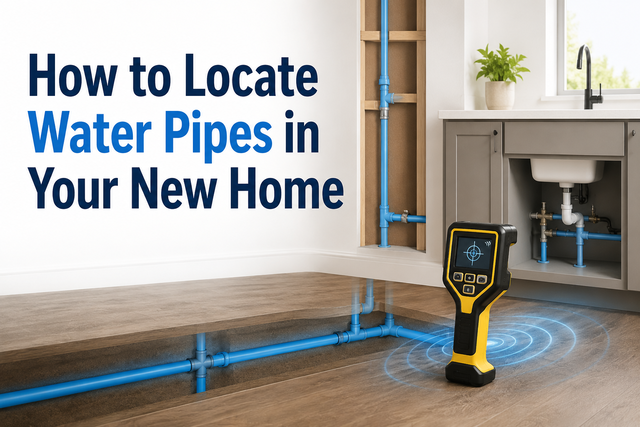
How to Locate Water Pipes in Your New Home
Relocating can bring both excitement and challenges because you need to deal with many unanticipated issues. When moving to a new place, it is crucial to locate and be aware of the plumbing infrastructure.
Understanding the layout of the pipe network in your house allows you to minimise unforeseen damage when remodelling, make maintenance easier, and ensure safety during an emergency.
Many people frequently arrange an appointment with a plumber in Sydney to regularly check their water pipes’ condition as an early prevention of costly blocked drain repair.
Nevertheless, there are certain concrete actions that you can implement before letting the professional do their job to help your relocation.
Why It’s Important to Identify Water Pipe Locations in Your Home Early
This element is an integral part of a building, as it provides clean and safe water to be consumed for drinking, cooking, and showering, as well as properly controlling the wastewater.
If you inaccurately spot these pipes, you will end up in serious problems, such as accidentally digging into a pipeline when gardening or when mounting a home appliance.
Recognising your pipe arrangement is important for both simplicity and security. First of all, it will allow you to notice plumbing issues right away. Moreover, it will make plumbing improvement effortless and reduce the possibility of unwanted harm caused by the water system affecting your house.
Finally, if you are thinking about doing renovation work, an adequate knowledge of your plumbing infrastructure will guarantee compatibility to regulations.
How to Find Water Pipes in Your Home
You might wonder how to detect water pipes in walls if you have never seen the construction work of the house you live in. Actually, there are some tips that you can follow to know where the water pipes are in your house.
1. Check the House Blueprint
Even though you have never seen the building process of your house, you can always request to see the blueprint of the house to the building contractor, housing development company, or the local authorities.
These architectural drawings not only feature the construction designs but also the layout of the water piping inside the property. It will show you how to find where water enters the house and whether they are interconnected with any underground piping lines.
2. Identify Areas Where Pipes Are Usually Installed
If you are not able to obtain the initial construction plan of your house, you can also carefully observe your house to find obvious indicators of water pipes. It is recommended to pay more attention to the area where water is mostly used as follows.
- Utility room: the place where you wash your clothes is usually connected to the water source and drainage lines.
- Toilets and kitchens: you can always find pipes installed behind the sink or showers. You can also inspect the control panels that are usually enclosed in a box and mounted on the walls.
- Water heater: This heating device is directly attached to the primary piping networks. Hence, it is an ideal place to begin your observation of the water system in your house.
3. Inspect the Outdoor Areas Around Your Property
Other than paying attention to the rooms inside your house, it is also recommended to take a look at the outdoor spaces of your property. Here are several spots that you can observe:
- Metering systems: it is normally installed close to the property border. From this point, the primary water supply enters the house.
- Garden faucets: the house yard is usually equipped with faucets linked to the water sources to water the plants. It also frequently becomes an indicator of pipelines installed underground.
- Sewage testing sites: Ground-level cylindrical or rectangular-shaped covering the designated wastewater circulation.
When you examine these areas, it enables you to visualise the plumbing infrastructure beneath the ground with no digging required.
4. Use Pipe Locator Technology
Nowadays, advanced technology enables you to take advantage of a pipe locating device to identify buried metal or plastic pipes behind the walls or underground.
This innovation can be especially useful if you plan a construction project in the outdoor areas of your property.
5. Follow the Direction of Water Flow in Your House
Make use of your senses to notice where the water flows inside your house. When the water runs, focus on the sound of the water to uncover the approximate flow direction through the walls or beneath the floors.
Sometimes you can also feel the movements of the water by lightly tapping your hand on surfaces where water flows. This method is not 100% reliable, but it can offer additional insights when it is combined with other tips mentioned above.
6. Book a Professional Pipe Inspection
Scheduling a pipe assessment is highly recommended for those who seek clarity regarding their plumbing infrastructure.
Hiring a professional plumber in Sydney to complete this job equally means gaining benefits from exclusive plumbing repair equipment like CCTV drain cameras to monitor the water supply and the piping network.
This assessment procedure will provide live footage of your plumbing system, identify warning signs of leakage and deterioration, and determine the actual pipe placement and its components. This approach is worthwhile to save you from unnecessary spending due to unforeseen plumbing issues.
Conclusion
You can take several strategies mentioned above on how to find where water enters the house. However, if all the DIY techniques are not effective, maybe it is time for you to let the expertise in the field take over the work.
They have been certified for their skills and experience in dealing with plumbing installation for years. Professional plumbers can also detect early drainage problems during inspections, helping homeowners avoid the need for expensive blocked drain repairs in Sydney later on.